There are two reviews in the latest New York Review of Books on diaries and journals. One concerns Jimmy Carter's release of his diaries from his White House years. The other is the publication by the Library of America of an edition in two volumes of Ralph Waldo Emerson's massive private journals (the actual journals, according to the reviewer, comprise 40 thick volumes; the two under review, covering a span of 57 years, come out combining the two volumes, to around 2,000 pages). Carter's diaries, despite the headline-grabbing "revelation" that he and the late-Sen. Edward Kennedy clashed over health care reform, is revealing not just of this particular dispute. Carter had pretty solid, yet succinct, opinions on all sorts of people, from German Chancellor Helmut Schmidt to the late Sens. Scoop Jackson and Frank Church. Mining the wealth of detail, the reviewer concludes that, in many ways, Carter has become his own worst enemy, not least by publishing these diaries. He also recently shot himself in the foot (which was embedded in his mouth, no mean feat) by declaring that his was the best post-Presidency career of all. That this has often been remarked upon is true enough; that he was un-humble enough to agree with this assessment says much about the character of the man.
Emerson's journals in many ways appear similar to Carter's. Rich in detail, precise and unflagging in his opinions on people and events (the young Emerson dismisses a small group of English Romantics, including Coleridge, even as one is hard pressed to discover differences between Romanticism and much of Emerson's pantheistic, individualist notions of human possibility), reveals both the sorrow at a series of deaths that occurred in a span of a few short years - his young wife's, two brothers, his son - and the ensuing heroic, monumental efforts to overcome that grief and continue to affirm the basic goodness not just of humanity, but the entire Universe. One can speculate on whether this was an act of self-delusion, an example of a powerful will and intellect integrating the events of his life with his vision of an ordered, loving universe, or the maundering thoughts of a borderline sociopath Yet, the sheer volume of his private thoughts makes any simplistic reduction of this complex individual impossible.
I used to keep a journal. I started the summer after my freshman year in college, as an attempt to come to terms with a relationship gone horribly wrong. I also took the opportunity to reflect on events in the larger world. I have kept these journals, written in spiral notebooks, but am now thinking again about whether or not they should be kept around. In the case of Carter, it seems that publishing his detailed account of his far-too hands-approach to the Presidency reveals him to be an individual capable of an interpersonal pettiness that emerged in his public life in his far-too-revealing 1979 speech scolding the American people for a failure of spirit, known for a word - "malaise" - that never actually appeared in the speech. It is possible to reveal far too much of oneself, particularly if one is still around to hear critics gasp in wonder at one's faults.
The original "blogs", or web logs, were little more than on-line journals. Some of the best I still read are exactly that. Even my own is little more than that, and considering the limitations of the genre it is surprise that anyone thinks they can be much more than that. It is this more than anything that lends a certain credence to critical dismissal of even the best political blogs as nothing more than the muddled musings of persons ill-equipped to do serious analytical reflection on our current events.
We now come to the crux of the issue at the heart of the whole journaling/blogging enterprise. Even the most impersonal writings open up critics to the question of identity. "Who are you that we should heed your words?" is the most basic question posed to any authority. Even those bog writers who admit their identity in public (more common now than in the past) find themselves facing this critical question, usually countered by demanding an attention to the substance of their work. Yet, no writing gains authority apart from the acceptance of the authority of the person who wrote it. On the one hand, it is possible to consider any piece of writing "on the merits". Doing so, however, makes of any writing something unreal. A person wrote this or that. A person with a point of view, a background, educated or not, informed or not, that lends credibility to that writing, or detracts from it.
Until recently, journaling was an attempt by individuals to forge an identity, to question their identity, so they could then move out in to public without needing to reveal their inner struggle. Now, that sphere of privacy has been eradicated. Identity is no longer forged in the precinct of the private. On the contrary, it is becoming part of our larger culture of public display. Whether it is the antics of "reality TV" - which is no more "real" than scripted television - or the proliferation of blogs dealing with an individual's sex life, drinking consumption, relationships with family, we no longer even consider it necessary to keep parts of our lives from public scrutiny. Getting input from people on how we live our lives is part of our culture now. Even an octogenarian like Carter has succumbed, seeing in the publication a possibility for public vindication (which has gone very badly wrong). Emerson's journals, on the other hand, reveal that the man behind the essays and sermons and pamphlets and occasional writings struggled to live out his own creed, could be both magnanimous and petty, and rounds out an understanding of him as a human being who understood that part of being human, being an individual, is best forged in fires behind closed doors.
Wednesday, October 13, 2010
Tuesday, October 12, 2010
A Boring And Irrelevant Family Story
A discussion on a Friend's Facebook page got me thinking about how some life-lessons I got from my home are tinged with bittersweet. If you know my parents, or their relatives, please don't repeat this. It's just been on my mind.
My mother has always been unfailingly polite to her children's significant others. Yet, at least for me, she has also been polite enough not to mention a prior lady-friend in the presence of a later one. My own sense of this was this came from her own family opening up their home to wayward children, as well as having a couple wayward children of their own. A large amount of tolerance was necessary in a home that housed Tom Johnston.
My mother told me a story, though, that changed my mind about some thing. Before she and my father started dating in the late 1940's, Dad had been in a long-term relationship with another woman, whose name was Darlene. My understanding is that, one day, she was just gone. No note, no message, no forwarding address. Nothing. Just . . . gone.
The first time my mother met my father's family, all of them - his parents, his brother, his sister - spent the entire time raving about how wonderful Darlene was. How beautiful. To say that my mother's feelings were hurt would be an understatement. When she told me this story, she said that she promised herself that she would never do the same thing to her own children.
This is not an indictment of the callousness of my father's family. It is rather, a story that, to me, illustrates how the things we learn as we come of age, the things we hope to carry with us to make us better people, are far too often rooted in pain and sadness. It would be much better is we just knew how to treat one another, how to live with consideration for others as the root of our interactions. Unfortunately, we have to learn the hard way.
My mother has always been unfailingly polite to her children's significant others. Yet, at least for me, she has also been polite enough not to mention a prior lady-friend in the presence of a later one. My own sense of this was this came from her own family opening up their home to wayward children, as well as having a couple wayward children of their own. A large amount of tolerance was necessary in a home that housed Tom Johnston.
My mother told me a story, though, that changed my mind about some thing. Before she and my father started dating in the late 1940's, Dad had been in a long-term relationship with another woman, whose name was Darlene. My understanding is that, one day, she was just gone. No note, no message, no forwarding address. Nothing. Just . . . gone.
The first time my mother met my father's family, all of them - his parents, his brother, his sister - spent the entire time raving about how wonderful Darlene was. How beautiful. To say that my mother's feelings were hurt would be an understatement. When she told me this story, she said that she promised herself that she would never do the same thing to her own children.
This is not an indictment of the callousness of my father's family. It is rather, a story that, to me, illustrates how the things we learn as we come of age, the things we hope to carry with us to make us better people, are far too often rooted in pain and sadness. It would be much better is we just knew how to treat one another, how to live with consideration for others as the root of our interactions. Unfortunately, we have to learn the hard way.


Ernst Bloch On The Possibility Of The Church
Because of his style of writing and the vagaries of translation, Ernst Bloch is not eminently or pithily quotable. All the same, the following from "The Nationalized God and the Right to Community" in Man On His Own is in need of quoting.
The gates to hell will not overwhelm the Church; it has opened its own gates to hell too often. But it is one thing for the power Church to pass, the Church of superstitions, and would be quite another thing if a power-free force of conscience should be on guards, should undertake to stand guard and to teach whitehr and why. In the future ship of state (said Bebel), the teacher, not the officer, will be Number One; and the same could be case in a Church embarked on a voyage without superstititions. It could be thoroughly religious, but not in the sense of a re-ligion or reconnection with the cominion and its mythologies, but as the forward reconnection of a whole dream with our deficient make-shifts.This juxtaposition between what the Church could be (the first quoted paragraph) and what the Church, too often, is (the second) offers a view of the possibility of the Church living out of its yet-to-be-realized future, that lies as the kernel buried in the sterile soil of the present. At the very least, it should be noted that Bloch's insight and prophetic criticism should be given a fair hearing.
Now to get back to our given Church: it lives almost entirely for modesty and moneyed piety. It zealously inveights agaisnt the harm done to Joseph and the sheep, but it has made its arrangements with the upper classes and serves as their spiritual defender. It bristles at see-through blouses, but not at slums in which half-naked children starve, and not, above all, at the conditions that keep three quarters of mankind in misery. It condemns desperate girls who abort a foetus, but it consecrates war, which aborts millions. It has nationalized its God, nationalized him into ecclesiatic organization, and has inherited the Roman empire under the mask of the Crucified. It preserves misery and injustice, having first tolerated and the approved the class power that causes them; it prevents any seriousness about deliverance by postponing it to St. Never-Ever's Day or shifting it to the beyond.
Monday, October 11, 2010
A Lesson From Lost
So I'm watching the entire series, straight through. In the third episode of Season 2, when Jack and Locke and Kate encounter Desmond in the Hatch for the first time, Jack's reaction is almost violently reactive. He refuses to accept anything that is told him, not the least the order to put down his gun or Locke dies.
Jack's obstinate refusal to accept the oddities of the island - his insistence on keeping everything on the level of the mundane, despite multiple evidences that there is something far more happening - is in many ways the predicament so many of us moderns face. We are put in situations that defy easy explanation. We face events that seem to defy any rational understanding, or understanding based on our previous experience. Jack's violence, his insistence that reality conform to his own blinkered, limited understanding of reality is too often the reaction we see in people who cannot, will not seek to understand what is really happening. They refuse to accept what should be quite clear and plain because it falls outside their accepted canons of understanding.
Jack, in other words, is a Tea Partier. He is also, in these episodes (and in many others) quite an asshole. Were I on the island, I would quite quickly tire of him.
Jack's obstinate refusal to accept the oddities of the island - his insistence on keeping everything on the level of the mundane, despite multiple evidences that there is something far more happening - is in many ways the predicament so many of us moderns face. We are put in situations that defy easy explanation. We face events that seem to defy any rational understanding, or understanding based on our previous experience. Jack's violence, his insistence that reality conform to his own blinkered, limited understanding of reality is too often the reaction we see in people who cannot, will not seek to understand what is really happening. They refuse to accept what should be quite clear and plain because it falls outside their accepted canons of understanding.
Jack, in other words, is a Tea Partier. He is also, in these episodes (and in many others) quite an asshole. Were I on the island, I would quite quickly tire of him.
Another Day, Another Gay Suicide
This time, it's Norman, OK.
A 19-year old gay man committed suicide following a heated Norman city council meeting that focused on homosexuality, the teen's family said.Please note, the lack of acceptance wasn't from his family. It was the general lack of acceptance in the larger world.
--snip--
"I also think it's not dark thinking or bigoted thinking to have an opposition to this...But it's clear thinking," said one Norman resident during the meeting.
"Recruiting children into these lifestyles will be very easy with this kind of open format," said another resident during the city council meeting.
--snip--
Zach's father said his son was a very private person who came out during high school. He said the Norman North graduate was bullied and harassed at school for being gay. Van Harrington said he feels a lack of acceptance from society and what he calls a "toxic meeting" last month is what finally pushed Zach over the edge.
In Other News - The Sun Rises In The East
A report that a Republican said something both stupid and hateful about gays is about as newsworthy as reports of the eastern horizon brightening in the early morning hours. The only reason to report it is to shine a light on such ugliness.
Beyond that, the only thing shocking about it is what took Carl Paladino so long.
Beyond that, the only thing shocking about it is what took Carl Paladino so long.
Sunday, October 10, 2010
It's Giuliani Time All Over Again
The only difference between the NYPD and the Latin Goonies is the former had badges:
The nine members of the Latin King Goonies gang heard a rumor one of their teenage recruits was gay and then found the teen, stripped him, beat him and sodomized him with a plunger handle until he confessed to having had sex with a man, police said. The gang members then found a second teen they suspected was gay and tortured him and the man, police say.
The gang members found the 30-year-old man by inviting him to a house, telling him they were having a party, police said. When he arrived, they burned, beat and tortured him for hours and sodomized him with a miniature baseball bat, police said.
King Solomon Burke RIP
Solomon Burke was a large man in every sense of the word. He partook of all that life had to offer, eating, drinking, marrying, and procreating to joyous excess. His music career, too, crossed the spectrum from standard R&B through country music (he loved it) to gospel (among his many ventures was time spent as a preacher).
When he was inducted in to the Rock and Roll Hall of Fame, much later than he should have been, he was surrounded by part of his large family and entourage in another of those moments of ecstatic excess.
His singing, like his life, was done without restraint, with joy (even as he did heart rending ballads and songs of political and social protest). Even seated, he radiated an energy that was contagious. As in this clip from an appearance on the British program Top of the Pops.
The world is a little smaller today because he is no longer with us. At least he left behind a catalog as large as his own life from which we can continue to learn how to live life to its fullest, always with joy.
When he was inducted in to the Rock and Roll Hall of Fame, much later than he should have been, he was surrounded by part of his large family and entourage in another of those moments of ecstatic excess.
His singing, like his life, was done without restraint, with joy (even as he did heart rending ballads and songs of political and social protest). Even seated, he radiated an energy that was contagious. As in this clip from an appearance on the British program Top of the Pops.
The world is a little smaller today because he is no longer with us. At least he left behind a catalog as large as his own life from which we can continue to learn how to live life to its fullest, always with joy.
An Election Year Psalm
Today's lectionary readings include Psalm 146, verses three and four of which read as follows in the NRSV:
Do not put your trust in princes,We would do well to remember that on all sides of the political aisle.
in mortals, in whom there is no help.
4 When their breath departs, they return to the earth;
on that very day their plans perish.
Saturday, October 09, 2010
Overwrought
In December, 1980, I was playing at my high school concert band's winter concert when word reached me that John Lennon had been shot and killed by a deranged fan. Bleeding his life away outside his building, I have to wonder if Lennon understood what had happened. At 15, I was only dimly aware that Lennon was anything other than a member of the Beatles, had a prickly personality, and had recently released an album of new work that was, to my young ears, kind of middle-of-the-road pop that wasn't all that exciting.
Ninety miles away, at my future University alma mater, a mournful fan took a marker and scrawled through the tunnel-like passages in the arts building, "Why was John Lennon shot?" A frustrated critic answered his question at one point, in a much larger hand - "Who the fuck cares?"
Today is Lennon's birthday. Had he lived, he would have been 70 years old. In some respects, dying relatively young at 40, and murdered to boot, have shielded Lennon from a more critical eye. His surviving band mates, in particular Paul McCartney, managed to turn Lennon's death in to a windfall (although George Harrison did pen a marvelous tribute song in the mid-1980's). I do not think it unfair to say that Lennon's cult of personality, created and sustained by his massive ego combined with frail self-image, makes it difficult to make clear some things about who Lennon was and what he did.
He was a singer in a rock band. He was far more intelligent and witty than the average British working-class youngster, and was surprised by his own intelligence and wit. Having some talent at writing and arranging songs, combing not just rock and roll and R&B, but also show tunes and even British dance-hall music ("When I'm 64" is the best example of this) to create a succession of sounds over time that would be hard to pin down as "The Beatles' sound". With the exception of Ringo's drum sound, brought out by producer George Martin, there is really little unifying the Beatles catalog, musically. Consider "I Saw Her Standing There" and "Revolution No. 9" - if someone did not know they were done by the same band, would you believe someone who told you they were?
Lennon's post-Beatles career, such as it was, was an archetype of narcissistic self-indulgence - from drug addiction to the nonsensical wallowing in self-pity encouraged by his participation in Primal Scream Therapy, to the promotion of Yoko's middlebrow "art" to a far-too-publicized "retirement" that managed to accommodate not only his drug use, but time spent with a mistress, and more self-indulgence.
The emergence of Double Fantasy was hailed at the time as a marvelous return to form, yet we hear in the lyrics the same tired refrain - the most interesting thing John Lennon can think about is . . . John Lennon. The music is spare, as was his wont after the Beatles, but the melodies and harmonies were hardly anything more than rearrangements of earlier tunes. Lennon even advertised his on-going sturm und drang over his relationship with his former bandmates, first before the release of the album with a full-page-ad in the New York Times that was a meandering bit of verbiage that included a reference to "three angels" that may, or may not, have been George, Paul, and Ringo. He indulged in guessing games over whether he would tour or not. He claimed to suffer from stage fright, talking endlessly about how sick he was flying from Europe to Toronto for the Live Peace concert. Yet, if playing live made him physically ill, why talk about it? Why make people guess? Because the most fascinating thing about John Lennon was, for him . . . everything about him.
No one deserves to die young. No one deserves to die, leaving behind a wife and young child. Lennon's death left his two families - his first wife Cynthia and son Julian along with Yoko and Sean - without his presence. The far-too-public ghost fans have created is not sustained by the meager remnants left behind. While I certainly acknowledge the influence the Beatles had upon popular music of all kinds, the creation of the legend of John Lennon is one I refuse to sustain, because its most ardent believer was . . . John Lennon.
Ninety miles away, at my future University alma mater, a mournful fan took a marker and scrawled through the tunnel-like passages in the arts building, "Why was John Lennon shot?" A frustrated critic answered his question at one point, in a much larger hand - "Who the fuck cares?"
Today is Lennon's birthday. Had he lived, he would have been 70 years old. In some respects, dying relatively young at 40, and murdered to boot, have shielded Lennon from a more critical eye. His surviving band mates, in particular Paul McCartney, managed to turn Lennon's death in to a windfall (although George Harrison did pen a marvelous tribute song in the mid-1980's). I do not think it unfair to say that Lennon's cult of personality, created and sustained by his massive ego combined with frail self-image, makes it difficult to make clear some things about who Lennon was and what he did.
He was a singer in a rock band. He was far more intelligent and witty than the average British working-class youngster, and was surprised by his own intelligence and wit. Having some talent at writing and arranging songs, combing not just rock and roll and R&B, but also show tunes and even British dance-hall music ("When I'm 64" is the best example of this) to create a succession of sounds over time that would be hard to pin down as "The Beatles' sound". With the exception of Ringo's drum sound, brought out by producer George Martin, there is really little unifying the Beatles catalog, musically. Consider "I Saw Her Standing There" and "Revolution No. 9" - if someone did not know they were done by the same band, would you believe someone who told you they were?
Lennon's post-Beatles career, such as it was, was an archetype of narcissistic self-indulgence - from drug addiction to the nonsensical wallowing in self-pity encouraged by his participation in Primal Scream Therapy, to the promotion of Yoko's middlebrow "art" to a far-too-publicized "retirement" that managed to accommodate not only his drug use, but time spent with a mistress, and more self-indulgence.
The emergence of Double Fantasy was hailed at the time as a marvelous return to form, yet we hear in the lyrics the same tired refrain - the most interesting thing John Lennon can think about is . . . John Lennon. The music is spare, as was his wont after the Beatles, but the melodies and harmonies were hardly anything more than rearrangements of earlier tunes. Lennon even advertised his on-going sturm und drang over his relationship with his former bandmates, first before the release of the album with a full-page-ad in the New York Times that was a meandering bit of verbiage that included a reference to "three angels" that may, or may not, have been George, Paul, and Ringo. He indulged in guessing games over whether he would tour or not. He claimed to suffer from stage fright, talking endlessly about how sick he was flying from Europe to Toronto for the Live Peace concert. Yet, if playing live made him physically ill, why talk about it? Why make people guess? Because the most fascinating thing about John Lennon was, for him . . . everything about him.
No one deserves to die young. No one deserves to die, leaving behind a wife and young child. Lennon's death left his two families - his first wife Cynthia and son Julian along with Yoko and Sean - without his presence. The far-too-public ghost fans have created is not sustained by the meager remnants left behind. While I certainly acknowledge the influence the Beatles had upon popular music of all kinds, the creation of the legend of John Lennon is one I refuse to sustain, because its most ardent believer was . . . John Lennon.
Too Little Too Late
Dana Millbank continues exposing Glenn Beck for the ignorant fraud that he is. All the same, I am less than moved by the series. Even acknowledging, as Bob Somerby does, that this kind of thing should be rewarded with a certain level of praise as the proper role of functioning journalism, I am left frustrated because of one simple fact - anyone paying attention has known for quite some time that Beck is a crank, a kook, purveyor of conspiracy theories that don't even have the single virtue of some facts behind them, and an ignoramus miseducating two million people nightly.
After the Bolshevik Revolution was secure, Lenin and Trotsky turned their attention to the west. Lenin decided that it was necessary to coddle the socialist parties in western Europe, calling them "useful idiots". Hardly revolutionary, these participants in the democratic process (as it existed in Europe in the 20's) became lightning rods for capitalist rage. Lenin figured that, as long as the ruling class focused their ire on these parties, the real revolutionaries, the real threats to the capitalist order - the communists - could make their way to power unencumbered by official attention. Obviously, that isn't what happened, but the idea of using front groups to disguise the workings of very real threats to the social and political order became embedded in the practice of politics.
Funny enough, the group that aped this particular practice was the rabidly anti-communist group The John Birch Society. Encouraged to do whatever it took to fight the impending communist takeover, orchestrated from above by no less a communist sympathizer than Dwight Eisenhower, the Birchers included creating front groups with innocuous-sounding names and bland mission statements to encourage greater participation in the defense of "freedom".
Oligarchs are far better at this sort of thing than independent actors with neither power nor influence. While not orchestrated consciously, the emergence of various figures to distract and entertain people is a recurrent reality.
We are currently in the throes of our greatest social, political, and economic crisis in nearly a century. It has been made suddenly very much worse by the revelation that banks, continuing their fraudulent, illegal behavior when they should have rested, quietly chastened, may have expropriated thousands, maybe millions, of homes illegally. Now sold at bargain-basement prices, the ownership of these homes can now become a matter of legal wrangling that may never be untangled.
For all that, what dominates so much of our public discussion? Christine O'Donnell's casual relationship with the truth. Whether an aide to California Attorney General and gubernatorial candidate Jerry Brown thought calling Republican candidate Meg Whitman a "whore" was a good campaign tactic. Finally, after last week's long piece and today's shorter one, we have Glenn Beck. Lachrymose, dramatic, Beck draws the attention of millions of people with his overwrought "discoveries" such as the American purchase of Alaska in the 1950's (it was purchased from the Russians in 1867) and the connivance of Barack Obama and George Soros to enrich the latter while empowering the former.
Hazarding a guess, I think this attention Beck is finally receiving, while a good thing, also indicates a certain wariness on the part of both his employers at News Corp. and the larger political class, regardless of party, at the attention and following he has. While not a member of the Tea Party, he certainly has his followers. His August rally at the Lincoln Memorial showed that, while not nearly as large as claimed by his dedicated fans, he does have disciples who are working to bring to office people who think and believe as he does. Rather than useful, the legions of Tea Partiers, encouraged by the notion that there really is someone who gives easy answers to the questions they face in the midst of strife, a name and a face to the enemy, now pose a threat to the real seats of power. The Establishment is waking up to the possibility that their creation will, New Prometheus-like, break its chains. Like Mary Shelley's fictional creature, who educated himself by stealing books by Goethe and others from a peasant (nice touch, that), Beck and his followers are armed with the auto-didact's wonder at worlds revealed through sources never dreamed. Except, alas, the sources upon which Beck and his followers rely are woefully bad.
It would have been far better had Beck's work been exposed two years ago or more. Not just Beck, however. Limbaugh, Hannity, Coulter, Levin - the whole panoply of right-wing publicists who peddle fake notions and potions have certainly been exposed by Media Matters for America, among other websites. They preach to the choir, and there has been a real need to speak out to a far larger audience about the political snake oil on offer. It has been needed not for years, but decades.
While commendable, Millbank's piece is just too little, too late.
After the Bolshevik Revolution was secure, Lenin and Trotsky turned their attention to the west. Lenin decided that it was necessary to coddle the socialist parties in western Europe, calling them "useful idiots". Hardly revolutionary, these participants in the democratic process (as it existed in Europe in the 20's) became lightning rods for capitalist rage. Lenin figured that, as long as the ruling class focused their ire on these parties, the real revolutionaries, the real threats to the capitalist order - the communists - could make their way to power unencumbered by official attention. Obviously, that isn't what happened, but the idea of using front groups to disguise the workings of very real threats to the social and political order became embedded in the practice of politics.
Funny enough, the group that aped this particular practice was the rabidly anti-communist group The John Birch Society. Encouraged to do whatever it took to fight the impending communist takeover, orchestrated from above by no less a communist sympathizer than Dwight Eisenhower, the Birchers included creating front groups with innocuous-sounding names and bland mission statements to encourage greater participation in the defense of "freedom".
Oligarchs are far better at this sort of thing than independent actors with neither power nor influence. While not orchestrated consciously, the emergence of various figures to distract and entertain people is a recurrent reality.
We are currently in the throes of our greatest social, political, and economic crisis in nearly a century. It has been made suddenly very much worse by the revelation that banks, continuing their fraudulent, illegal behavior when they should have rested, quietly chastened, may have expropriated thousands, maybe millions, of homes illegally. Now sold at bargain-basement prices, the ownership of these homes can now become a matter of legal wrangling that may never be untangled.
For all that, what dominates so much of our public discussion? Christine O'Donnell's casual relationship with the truth. Whether an aide to California Attorney General and gubernatorial candidate Jerry Brown thought calling Republican candidate Meg Whitman a "whore" was a good campaign tactic. Finally, after last week's long piece and today's shorter one, we have Glenn Beck. Lachrymose, dramatic, Beck draws the attention of millions of people with his overwrought "discoveries" such as the American purchase of Alaska in the 1950's (it was purchased from the Russians in 1867) and the connivance of Barack Obama and George Soros to enrich the latter while empowering the former.
Hazarding a guess, I think this attention Beck is finally receiving, while a good thing, also indicates a certain wariness on the part of both his employers at News Corp. and the larger political class, regardless of party, at the attention and following he has. While not a member of the Tea Party, he certainly has his followers. His August rally at the Lincoln Memorial showed that, while not nearly as large as claimed by his dedicated fans, he does have disciples who are working to bring to office people who think and believe as he does. Rather than useful, the legions of Tea Partiers, encouraged by the notion that there really is someone who gives easy answers to the questions they face in the midst of strife, a name and a face to the enemy, now pose a threat to the real seats of power. The Establishment is waking up to the possibility that their creation will, New Prometheus-like, break its chains. Like Mary Shelley's fictional creature, who educated himself by stealing books by Goethe and others from a peasant (nice touch, that), Beck and his followers are armed with the auto-didact's wonder at worlds revealed through sources never dreamed. Except, alas, the sources upon which Beck and his followers rely are woefully bad.
It would have been far better had Beck's work been exposed two years ago or more. Not just Beck, however. Limbaugh, Hannity, Coulter, Levin - the whole panoply of right-wing publicists who peddle fake notions and potions have certainly been exposed by Media Matters for America, among other websites. They preach to the choir, and there has been a real need to speak out to a far larger audience about the political snake oil on offer. It has been needed not for years, but decades.
While commendable, Millbank's piece is just too little, too late.
Friday, October 08, 2010
On The Limits Of Economic Determinism
I started reading Man On His Own, a collection of essays by the German Marxist Ernst Bloch. This was the first of his writings translated to English. It is unique in my experience of writings by a Marxist because it has a foreword and introduction by theologians. Harvey Cox, whose moment in the sun was already fading when the book was published, wrote the Foreword. The German theologian Jurgen Moltmann, whose own work is, as was derisively noted by Karl Barth, a baptizing of Bloch's The Principle of Hope (I wonder to this day if Moltmann ever read anything other than the 53rd chapter of the three volumes), wrote the Introduction.
Born in 1885 in Ludwigshafen, a dirty, grimy industrial city, Bloch's young imagination was fired by, among other things, the horribly pulpy westerns of the German writer Karl May (Bloch's Austrian contemporary, Adolf Hitler, was also fond of May's books, which only proves, I think, that May's influence on the future of European history was far less than some might imagine) and the poetry of Goethe.
Young enough to celebrate the victories of the Bolsheviks in Russia, and to see promise in the failed revolutions in Hungary and Bavaria, Bloch carved out a niche by returning at least some of the romanticism to what had become, under Lenin and Stalin, the dry pedanticism of "scientific socialism". First with The Spirit of Utopia and later (written in exile during the Nazi era; Bloch sat in the New York Public Library writing furiously while his second wife worked menial jobs to pay the bills) The Principle of Hope, Bloch brought out the social-psychological roots of revolutionary consciousness, and saw in the utopian visions of everything from dreams to architecture the framework for a metaphysics in which the future became the only really Real thing, drawing the present toward its ineluctable, fully human realizations (a Platonizing that turns Plato's anti-humanism on its head).
The essays in the collection I am reading were written after Bloch was exiled from East Germany. He had returned to the Soviet-controlled area of Germany soon after the end of the Second World War, hoping to become part of the intellectual vanguard of the revolution in his homeland. Sad to say, his writings did not toe the far-too-narrow party line of Erich Honecker's small-minded Stalinism, and eventually - after being silenced, having his works smuggled to the West to be published, and serving some time under house arrest - he ended up in West Germany, where he took up a position that became meta-critical. Still insisting he was in line with Marxist tradition, he railed against the smallness of both East and West, against the shallow and violent triumphalism of Stalinist orthodoxy that brooked no dissent, and the equally shallow and no less violent triumphalism of western anti-communism.
Man On His Own is a very late work, not least because its overriding concern seems to be expanding revolutionary consciousness to include the not-yet of death and what happens after. The opening paragraphs of the first essay, "Karl Marx, Death, and the Apocalypse" deals a summary judgment upon the Leninist tradition, deriding it as a kind of Epicurean superficiality. Seeing in the satisfaction of that most basic need - filling the belly - the sum total of human happiness, this part of the Marxist tradition had little concern with culture in its many varieties. Religion most of all. Bloch, on the other hand, sees in the myths of apocalyptic the most powerful revolutionary critique of bourgeois society and of the "vulgar" Marxism that sees in the satisfaction of our immediate needs for continued biological survival the satisfaction of all our human wants and desires.
This is not to deny the necessity, for Bloch, of a very real political revolution. It is only to point out that, for Bloch, this political revolution, in which the entire structure of human relations is reenvisioned and restructured is the beginning of a more full, more human society.
Our current economic and political overlords - and there really isn't much difference between the two groups anymore - are no less insistent than Marx and his followers were that the sum total of human happiness, of human achievement, is reached when, through the workings of the market, the possibility of real human freedom through the accumulation of resources to stave off hunger has been achieved. The proponents of the the myth of the equation of our democratic Republic and unfettered capitalism, even now in its very real dotage, are no less enthusiastic economic determinists than their ideological foes (I think it is necessary to remember that the original neoconservatives, particularly Irving Kristol and Norman Podhoretz were either full-fledged members of the communist party or fellow-travlers; see Garry Dorrien's The Neo-Conservative Mind). The reduction of our civil life to economic consumerism, the false choices of our politics between two groups fully in hock to corporate interests, and the nihilism of a political class that sees power as an end to itself, rather than a calling to service is the end of any illusions any thoughtful observer should have on the ability of capitalism to serve the full needs of human beings.
Bloch's musings on the possibilities inherent in stories of life-after-death and the apocalyptic musings of Christian and Jewish millenarianism offer a far deeper vision of the possibilities of human life than any kind of "scientific" view of human happiness that asks that we only surrender that which is most important to us in order that we may eat.
Born in 1885 in Ludwigshafen, a dirty, grimy industrial city, Bloch's young imagination was fired by, among other things, the horribly pulpy westerns of the German writer Karl May (Bloch's Austrian contemporary, Adolf Hitler, was also fond of May's books, which only proves, I think, that May's influence on the future of European history was far less than some might imagine) and the poetry of Goethe.
Young enough to celebrate the victories of the Bolsheviks in Russia, and to see promise in the failed revolutions in Hungary and Bavaria, Bloch carved out a niche by returning at least some of the romanticism to what had become, under Lenin and Stalin, the dry pedanticism of "scientific socialism". First with The Spirit of Utopia and later (written in exile during the Nazi era; Bloch sat in the New York Public Library writing furiously while his second wife worked menial jobs to pay the bills) The Principle of Hope, Bloch brought out the social-psychological roots of revolutionary consciousness, and saw in the utopian visions of everything from dreams to architecture the framework for a metaphysics in which the future became the only really Real thing, drawing the present toward its ineluctable, fully human realizations (a Platonizing that turns Plato's anti-humanism on its head).
The essays in the collection I am reading were written after Bloch was exiled from East Germany. He had returned to the Soviet-controlled area of Germany soon after the end of the Second World War, hoping to become part of the intellectual vanguard of the revolution in his homeland. Sad to say, his writings did not toe the far-too-narrow party line of Erich Honecker's small-minded Stalinism, and eventually - after being silenced, having his works smuggled to the West to be published, and serving some time under house arrest - he ended up in West Germany, where he took up a position that became meta-critical. Still insisting he was in line with Marxist tradition, he railed against the smallness of both East and West, against the shallow and violent triumphalism of Stalinist orthodoxy that brooked no dissent, and the equally shallow and no less violent triumphalism of western anti-communism.
Man On His Own is a very late work, not least because its overriding concern seems to be expanding revolutionary consciousness to include the not-yet of death and what happens after. The opening paragraphs of the first essay, "Karl Marx, Death, and the Apocalypse" deals a summary judgment upon the Leninist tradition, deriding it as a kind of Epicurean superficiality. Seeing in the satisfaction of that most basic need - filling the belly - the sum total of human happiness, this part of the Marxist tradition had little concern with culture in its many varieties. Religion most of all. Bloch, on the other hand, sees in the myths of apocalyptic the most powerful revolutionary critique of bourgeois society and of the "vulgar" Marxism that sees in the satisfaction of our immediate needs for continued biological survival the satisfaction of all our human wants and desires.
This is not to deny the necessity, for Bloch, of a very real political revolution. It is only to point out that, for Bloch, this political revolution, in which the entire structure of human relations is reenvisioned and restructured is the beginning of a more full, more human society.
Our current economic and political overlords - and there really isn't much difference between the two groups anymore - are no less insistent than Marx and his followers were that the sum total of human happiness, of human achievement, is reached when, through the workings of the market, the possibility of real human freedom through the accumulation of resources to stave off hunger has been achieved. The proponents of the the myth of the equation of our democratic Republic and unfettered capitalism, even now in its very real dotage, are no less enthusiastic economic determinists than their ideological foes (I think it is necessary to remember that the original neoconservatives, particularly Irving Kristol and Norman Podhoretz were either full-fledged members of the communist party or fellow-travlers; see Garry Dorrien's The Neo-Conservative Mind). The reduction of our civil life to economic consumerism, the false choices of our politics between two groups fully in hock to corporate interests, and the nihilism of a political class that sees power as an end to itself, rather than a calling to service is the end of any illusions any thoughtful observer should have on the ability of capitalism to serve the full needs of human beings.
Bloch's musings on the possibilities inherent in stories of life-after-death and the apocalyptic musings of Christian and Jewish millenarianism offer a far deeper vision of the possibilities of human life than any kind of "scientific" view of human happiness that asks that we only surrender that which is most important to us in order that we may eat.
Peace Prize
I think it is more than awesome that the folks in Stockholm gave the most prestigious award for the promotion of peace to an imprisoned Chinese dissident, Liu Xiaobo. First, like the award given the Burmese democratic activist Aung San Suu Kyi, it shines a light under the rocks of a tyrannical regime. The result - the Chinese are quite simply furious - is a wonder to behold. Every time we are told by some boob and yahoo that the promotion of a more open economic system can only result in a free, more open, eventually democratic China should shut up and consider the events surrounding this announcement. Liu is in prison because he wrote and circulated a document promoting peaceful, democratic change in the People's Republic. He is serving eleven years for doing what we on the internet do all the time - circulating a petition. For all those on the right who insist the Obama Administration is leading us on a path to communist oppression, we should remember what real totalitarianism looks like.
I remember well those fateful days in the early summer of 1989 when the young people of China were poised on the precipice of change. It was a year for political miracles, and it seemed history was on their side. There was a moment, just one brief shining moment, when it seemed the balance would tip in their favor. Pictures of soldiers joining the protesters in Tiananmen Square seemed to point to the steady erosion of support for the regime. It was not meant to be, and thousands died, thousands more ended up in prison or exile, and George H. W. Bush, within months, was kissing the ass of the bloody murderers in Beijing. Not a President since who hasn't written off the same young people who erected a monument to freedom that looked like the Statue of Liberty, betraying our most cherished values in the pursuit of filthy lucre.
Despite official Chinese rhetoric, Liu is a patriot. He loves his homeland, perhaps more than the average young Chinese. He loves his land so much he is willing to risk his freedom and his life to effect change in a place, historically, resistant to change other than the violent destruction of life, civil and human. Just as Aung San Suu Kyi's Nobel has done, Liu Xiaobo reminds us that there are millions around the globe who yearn for the freedom and opportunity offered, not by capitalism, but by the very structure of civil liberty and political openness embedded in our Constitution. The same freedoms far too many Americans are all too willing to set aside in the name of convenience, and the false hope that by doing so we might gain a measure of security.
Congratulations, Liu Xiaobo. I know that you will not receive word of the award where you are. I know you will not be able to travel to Stockholm to accept the Prize, and speak on the promise of a democratic China, over a billion people loose from the shackles of a government that gives them bread in exchange for their souls. My hope is that one day, you or another who follows in your footsteps will fulfill the real promise of China, and remind everyone that dissent is the highest love one can have for one's country.
I remember well those fateful days in the early summer of 1989 when the young people of China were poised on the precipice of change. It was a year for political miracles, and it seemed history was on their side. There was a moment, just one brief shining moment, when it seemed the balance would tip in their favor. Pictures of soldiers joining the protesters in Tiananmen Square seemed to point to the steady erosion of support for the regime. It was not meant to be, and thousands died, thousands more ended up in prison or exile, and George H. W. Bush, within months, was kissing the ass of the bloody murderers in Beijing. Not a President since who hasn't written off the same young people who erected a monument to freedom that looked like the Statue of Liberty, betraying our most cherished values in the pursuit of filthy lucre.
Despite official Chinese rhetoric, Liu is a patriot. He loves his homeland, perhaps more than the average young Chinese. He loves his land so much he is willing to risk his freedom and his life to effect change in a place, historically, resistant to change other than the violent destruction of life, civil and human. Just as Aung San Suu Kyi's Nobel has done, Liu Xiaobo reminds us that there are millions around the globe who yearn for the freedom and opportunity offered, not by capitalism, but by the very structure of civil liberty and political openness embedded in our Constitution. The same freedoms far too many Americans are all too willing to set aside in the name of convenience, and the false hope that by doing so we might gain a measure of security.
Congratulations, Liu Xiaobo. I know that you will not receive word of the award where you are. I know you will not be able to travel to Stockholm to accept the Prize, and speak on the promise of a democratic China, over a billion people loose from the shackles of a government that gives them bread in exchange for their souls. My hope is that one day, you or another who follows in your footsteps will fulfill the real promise of China, and remind everyone that dissent is the highest love one can have for one's country.
Thursday, October 07, 2010
Conversations Elsewhere
Joel Watts moderates a blog newly-retitled "Unsettled Christianity". In a discussion on a thread there concerning the AFA's opposition to a proposal before the Michigan legislature on bullying and sexual minority youth, Joel - who is a wonderful person extending a more than enough benefit of the doubt in order to open up space for discussion, offers up a link to the following:
In response to this, I responded as follows:
Just thought I'd point all this out.
On the one hand, many gay persons feel like Christians are attempting to bully them by passing laws against gay marriage or civil unions. On the other hand, Christians feel like many gay persons are attempting to bully them by passing laws to silence them so that they can no longer express their beliefs. The way forward is not to embrace the bully-victim cycle as the paradigm of choice but rather to realize that different views exist and that such views can be expressed without malevolent intent.If you clicked the link, the very first sentence, in my estimation, spells trouble:
In the case of the teenagers who have recently killed themselves, bullying has been argued to be a factor. While no bully can ever be fully blamed for someone choosing to end their own life, there is certainly truth to the claim that they may have contributed to the stress that led to someone's choice to commit suicide. Again, however, it might benefit us all to ask whether or not the bully-victim cycle was at work in the background of such events. When we do this, it may move us away from merely defaming others and pointing fingers to getting closer to the heart of the matter. Once we to begin ending the cycle is to attempt to find its recent starting point(s).
From the start, I want folks to know that I write this post as a person who has had close family members and friends who have been and/or are gay. I know the pains and struggles that many of them have faced and still deal with, and I am more than familiar with the sense of rejection that they have experienced, especially from religious folks. I also write this post as a Christian and even more, as a Christian who lives in the midst of the tensions between two groups who often seem to be at loggerheads with one another: the gay community and the evangelical church.Rather than see through the muddle created by any false equivalence, the author jumps in and celebrates that muddle. Rather than hear the cries of the suffering, we are called to understand a cycle in which poor Christian kids feel bullied by non-existent attempts to silence them and their "beliefs".
In response to this, I responded as follows:
While I appreciate the earnest desire behind this post, I disagree with it. At the heart of the (right-wing) anti-gay rhetoric of some who call themselves Christian is the explicit denial of their fundamental humanity. "You aren't 'gay', you are a sinner. You can and must choose to live your life differently than you do, or you are going to hell."On this same thread, we have Deb, who wrote the following:
For me, this has to change. It denies the reality that a person does not "choose" to be gay. A person "is" gay. Denying that reality, as Deb does repeatedly, does not make it a fact. It makes it an ignorant statement of bigotry, a point that is quite clearly beyond her.
Furthermore, if there was a rash of Christian teens offing themselves because queer teens were bullying them, I would be up in arms. If there were Christians who refused to self-identify because of fear that their parental/spousal rights and privileges would be stripped from them, or that they would lose their jobs, I would be incensed. If there was a whole network of Queer websites telling Christians that religion, as a matter of choice, can be changed, and should be in order for the country to be better, I would be fighting against that.
This is an example, in other words, of false equivalence, masked as evenhandedness.
1st. Explain why a married man with a family after years decides to leave his family for another man if it is Not a choice?To which I responded:
2nd . He had a roommate watching? in a college dorm? and yes he is to blame somewhat,should have went to a motel...
3rd.I had to toughen up. lots do ....
4th, God did not create Men to sleep with men, and women to sleep with women,He created man and then created woman for his helpmate,not another man,He destroyed Sodom and Gomorrah for just that...do you believe the Bible?
4th, Jesus rebuked the woman at the well, He told her to go and sin NO more... love is to be able to rebuke your brother, If you did not you would not care what he does,you would not want him to die in his sin... Love does not mean to just let everything slide like it is not wrong... to strive to be holy.. What would you think Yeshua would say to people today? I know he would love them and does, but do you think that he would go along with all the worlds sin? If my son was gay,or daughter, I would still love them but would not let them be together in my home, would I be wrong?
You write: "Explain why a married man with a family after years decides to leave his family for another man if it is Not a choice?"She has since responded, in a way:
Because people like you deny the reality that being gay is about who they are. Because people like you insist they are evil, wrong, a threat to our faith and society.
Sorry if this is harsh and judgmental, but my patience is at an end. It is precisely people who insist that are "anti-gay" yet draw a line at violence that make me wonder - why draw the line? You are denying the humanity of sexual minorities. Why not do violence to them, since they are less than fully human, in your eyes?
i have no desire to listen to drivel glossed in a misreading of the Bible. I have even less than zero desire to have someone call themselves "anti-gay" and ask to be treated with respect. Had you written "anti-black", say, or "anti-Jew", I would treat you in much the same way.
anti-gay? is so much different than being anti-black or anti-jew,,, sorry, you are born either black, not much you can do about that, or jewish, . lots of things you are born into that you can change.. it is a choice,,, sin is a choice, being holy is a choice, and not anyone , is a threat to my faith.... now society, that is a whole different ballgame,,, what our children are taught and what they learn makes them what they are when grown...and also, what do you think adultery is, it is not just a married couple cheating on each other, any fornication is Adultery... I think that would include men with men and women with women...I refuse to respond to this last, for the same reason I don't argue with creationists, global-warming deniers, and Holocaust deniers. She is wrong, she will not be convinced she is wrong, and treating her position as if it had any merit whatsoever only reinforces the notion that her position is something other than bigotry cloaked in nonsense.
Just thought I'd point all this out.
The Party Of Food Stamps
Newt reminds me of those actors from the 1930's who, as late the late-1960's, continued to grab the spotlight in an attempt either to relive their glory days, or to make younger actors aware they are young and neither as important nor powerful as they believe. Yet, in so doing, they become objects of humor, even derision. They manage to make a mockery of themselves, belittle their previous accomplishments. We all remember Spencer Tracy as the father in Who's Coming To Dinner, but what about his turn in his last picture, It's a Mad, Mad, Mad, Mad World? Clarke Gable went out with a whimper, fading along with Marilyn Monroe (whose suicide may have been hastened by Gable's obstinate refusal to sleep with her), in The Misfits.
So we have Gingrich, yesterday, stealing headlines with his "party of foodstamps" nonsense. Does Gingrich not understand that it isn't 1980? Does he not get that, in the middle of a recession, there are millions more on public assistance than there might otherwise be? Does he not understand that the easiest, quickest retort is that the Republicans are "the party of the millionaires", particularly in a time of economic devastation?
The surest, simplest way to make short work of this is to own it. Apparently, House Speaker Nancy Pelosi managed to do that very thing today, pointing out the beneficial multiplier effect from food stamps. CNN reporter John King did the entire universe a service when, in commenting on the alleged relevance of both the phrase and the larger story it has produced, he let the world know that he was the product of a home that needed, and used, food stamps.
Finally, Gingrich, touted for far too long as "an intellectual", made himself look not just ignorant, but silly, by insisting that the multiplier to which Pelosi pointed was nothing more than "liberal math". While I know that this will not silence him, at this point, it might be a good thing for the country that he receives unwarranted attention. My guess is Republican heads were shaking across the land as the story first broke yesterday. In all likelihood, there was probably a furious exchange of cell phone calls and Blackberry IMs attempting to put the genie back in the bottle. This close to an election that just a month ago seemed certain to be a Republican cake-walk, but now increasingly seems a toss-up (in an off-year cycle near the bottom of a bad business cycle), it is a stunt like this that can do nothing but good for the Democrats.
So, sure, the Democratic Party is the Party of Food Stamps. Far better to be known as a party that is willing to help those in need than the party that is willing to bail out our largest financial institutions while turning a deaf ear to the needs of millions of citizens losing their jobs, their savings, their homes, and their sense of equanimity. I'll take the epithet, and wear it with pride and distinction.
So, Newt, thanks. Now, go back to schtupping your third wife (acquired while still married to number 2, and spending most of your public hours railing against the horrors of Bill Clinton receiving oral sex from a woman not his wife; the future No. 3 didn't, I'm guessing?) and leaving the election to those who are running.
So we have Gingrich, yesterday, stealing headlines with his "party of foodstamps" nonsense. Does Gingrich not understand that it isn't 1980? Does he not get that, in the middle of a recession, there are millions more on public assistance than there might otherwise be? Does he not understand that the easiest, quickest retort is that the Republicans are "the party of the millionaires", particularly in a time of economic devastation?
The surest, simplest way to make short work of this is to own it. Apparently, House Speaker Nancy Pelosi managed to do that very thing today, pointing out the beneficial multiplier effect from food stamps. CNN reporter John King did the entire universe a service when, in commenting on the alleged relevance of both the phrase and the larger story it has produced, he let the world know that he was the product of a home that needed, and used, food stamps.
Finally, Gingrich, touted for far too long as "an intellectual", made himself look not just ignorant, but silly, by insisting that the multiplier to which Pelosi pointed was nothing more than "liberal math". While I know that this will not silence him, at this point, it might be a good thing for the country that he receives unwarranted attention. My guess is Republican heads were shaking across the land as the story first broke yesterday. In all likelihood, there was probably a furious exchange of cell phone calls and Blackberry IMs attempting to put the genie back in the bottle. This close to an election that just a month ago seemed certain to be a Republican cake-walk, but now increasingly seems a toss-up (in an off-year cycle near the bottom of a bad business cycle), it is a stunt like this that can do nothing but good for the Democrats.
So, sure, the Democratic Party is the Party of Food Stamps. Far better to be known as a party that is willing to help those in need than the party that is willing to bail out our largest financial institutions while turning a deaf ear to the needs of millions of citizens losing their jobs, their savings, their homes, and their sense of equanimity. I'll take the epithet, and wear it with pride and distinction.
So, Newt, thanks. Now, go back to schtupping your third wife (acquired while still married to number 2, and spending most of your public hours railing against the horrors of Bill Clinton receiving oral sex from a woman not his wife; the future No. 3 didn't, I'm guessing?) and leaving the election to those who are running.
Tuesday, October 05, 2010
We've Fallen A Long Way, Baby
There's been much rending of clothing over the publication that Glenn Beck puts out all sorts of crap. By "crap" I mean stuff that is either demonstrably false, or connections between events that exist only in his fevered imagination.
Once upon a time, there was another man who ruled via crap. He put the fear of God in to a former Army General and future President when he slimed the Chief of Staff during the Second World War and Secretary of State during the early post-war years. He lied about his service record. His name was Joseph McCarthy.
During hearings in 1954 concerning whether or not some dentists in the Army had been members of organizations that may or may not have ties to the Communist Party, McCarthy went too far. In the course of the proceedings, McCarthy broke a tacit agreement between the special counsel for his committee and the attorney representing those who were before the committee. A member of the law firm representing those before the committee had been, as a youth, a member of a left-wing organization for a couple years. This was well known, and it was agreed upon beforehand, between Roy Cohn and Joseph Welch that this young man would not assist Welch and that no one on the committee would mention either the young man's application to assist Welch, or anything about his past.
Joe, however, was having none of it. He not only brought it up; he went on and on and on about it. After having run out of steam, Welch asked a point of privilege, and destroyed McCarthy's career with one simple sentence: "Have you no decency, sir, at long last?"
It's been a long time since such a clear message of moral right was enough to rid us of a scourge. No, Beck has no decency, if he ever did. Yet, what is Beck than the offspring of Limbaugh and Hannity and Coulter and Schlesinger and the rest of the right-wing gabbers who earn buckets of money without a single virtue worthy of the name to their public careers? Like McCarthy, Beck is both reckless and cruel, but he gets paid a whole lot of money to be reckless and cruel and two million people watch him every single day because he is reckless and cruel.
Being right is no defense against success like Beck's. Being a better human being is no defense. There is, quite literally, nothing that can be done. Only Beck can destroy himself (in much the way McCarthy did, in some respects). At the point that he actually angers the folks who pay to keep him on the air, he's finished. Up until that point, we are stuck with him.
It would be nice if there were a Joseph Welch out there who could put an end to Beck. Or Hannity. Or News Corp. as a whole. There isn't.
From a better, vanished age . . .
Once upon a time, there was another man who ruled via crap. He put the fear of God in to a former Army General and future President when he slimed the Chief of Staff during the Second World War and Secretary of State during the early post-war years. He lied about his service record. His name was Joseph McCarthy.
During hearings in 1954 concerning whether or not some dentists in the Army had been members of organizations that may or may not have ties to the Communist Party, McCarthy went too far. In the course of the proceedings, McCarthy broke a tacit agreement between the special counsel for his committee and the attorney representing those who were before the committee. A member of the law firm representing those before the committee had been, as a youth, a member of a left-wing organization for a couple years. This was well known, and it was agreed upon beforehand, between Roy Cohn and Joseph Welch that this young man would not assist Welch and that no one on the committee would mention either the young man's application to assist Welch, or anything about his past.
Joe, however, was having none of it. He not only brought it up; he went on and on and on about it. After having run out of steam, Welch asked a point of privilege, and destroyed McCarthy's career with one simple sentence: "Have you no decency, sir, at long last?"
It's been a long time since such a clear message of moral right was enough to rid us of a scourge. No, Beck has no decency, if he ever did. Yet, what is Beck than the offspring of Limbaugh and Hannity and Coulter and Schlesinger and the rest of the right-wing gabbers who earn buckets of money without a single virtue worthy of the name to their public careers? Like McCarthy, Beck is both reckless and cruel, but he gets paid a whole lot of money to be reckless and cruel and two million people watch him every single day because he is reckless and cruel.
Being right is no defense against success like Beck's. Being a better human being is no defense. There is, quite literally, nothing that can be done. Only Beck can destroy himself (in much the way McCarthy did, in some respects). At the point that he actually angers the folks who pay to keep him on the air, he's finished. Up until that point, we are stuck with him.
It would be nice if there were a Joseph Welch out there who could put an end to Beck. Or Hannity. Or News Corp. as a whole. There isn't.
From a better, vanished age . . .
Sharing A Link That Might Help Someone
October is Domestic Violence Awareness Month. Author and good guy John Shore has a piece entitled "7 Reasons Women Say In Abusive Relationships", and he has asked that we make it more widely available via links on FB, our own sites, etc.
I am more than happy to do so. A few years back, I started researching the possibility of starting a rescue shelter for women trying to leave abusive relationships. In the course of checking out the need for such a facility, I discovered that in rural Boone County, IL, there was exactly one such facility and organization. There were thousands of reported cases of domestic violence, and exactly one place these women could turn to in order to help themselves.
We will never do enough to help completely, sad to say. At the very least, however, getting information to women trapped in this way can be a first step. Like alcoholism, domestic violence is one of those things that touches the lives of so many more people than we are willing to admit. Perhaps the most frustrating aspect of the phenomenon is, like alcoholism, getting people out from this kind of self-destructive hell is impossible from the outside. The first step always has to come from the individual who has reached rock bottom (usually in a hospital bed with bandages or a cast). If someone gets help because I passed on these marvelous straight-forward words, then I figure I've done more than my share.
So . . . LINK! Remember, the life you save may not just be your own, but yours, your kids, your grandkids, and all sorts of other people.
I am more than happy to do so. A few years back, I started researching the possibility of starting a rescue shelter for women trying to leave abusive relationships. In the course of checking out the need for such a facility, I discovered that in rural Boone County, IL, there was exactly one such facility and organization. There were thousands of reported cases of domestic violence, and exactly one place these women could turn to in order to help themselves.
We will never do enough to help completely, sad to say. At the very least, however, getting information to women trapped in this way can be a first step. Like alcoholism, domestic violence is one of those things that touches the lives of so many more people than we are willing to admit. Perhaps the most frustrating aspect of the phenomenon is, like alcoholism, getting people out from this kind of self-destructive hell is impossible from the outside. The first step always has to come from the individual who has reached rock bottom (usually in a hospital bed with bandages or a cast). If someone gets help because I passed on these marvelous straight-forward words, then I figure I've done more than my share.
So . . . LINK! Remember, the life you save may not just be your own, but yours, your kids, your grandkids, and all sorts of other people.
What's Left In The Church
At its most basic level, my vision of being the Church is simple enough - living out that love incarnate in Jesus crucified and risen. A love that knows nothing but compassion for all who suffer. For those excluded by a society who surround the word "value" with dollar signs. For those whose lives are ruled by fear of the yawning abyss beneath, above, and around them; an abyss of their own creation, but that has broken the shackles and now rules them.
My stumbling block, the rocks upon which my comfortable ship of faith always seems to break, is the existence of those who hate, exclude, divide, and deny in the name of Christ. More than contempt and frustration, they arouse a passionate rage within me. I find myself unable to move beyond it to the love and forgiveness to which we are all called. I find myself unwilling to grant to them the same dispensation that is granted me - unearned, prodigal grace in the midst of their sin.
What is most frustrating isn't the distortion, deliberate or otherwise, of the message of faith and hope and love that is the Gospel. It is the smallness of their vision. Their God, their Jesus, their Holy Spirit are small creatures, not seeing beyond the boundaries of their own fear and hatred to a world filled with all sorts of real people in need. Their God just cannot be reconciled with the testimony concerning who God is contained in the Bible. That God, the creator of all that is, is also the God who called Israel out of the land of bondage to be a light to the nations; this God called no people and made them The People.
This same God invested all of Divinity in the person and work of Jesus of Nazareth. In that life, God showed us who God is - a God who laughed and loved and raged at imbecility and reached out to those who had only seen hands raised in violence. In that death, God embraced the abyss and took it in and buried it. Then, on an early morning God left all that behind, never to have any power over us or the world ever again.
Maybe we have just become used to fear, used to being subject to the whims and fancies of arbitrary power, either natural of human, to really believe that in surrender we find the final, only truth. Maybe the lure of power, the seduction of all the trappings and gewgaws that accompany it blind us to the nothingness that surrounds them. Maybe the belief that, by declaring themselves the arbiter of who is within and who is outside the bounds of God's grace, they are only repeating the stale formula of days gone by gives them some kind of tenuous connection with the long history of the faith.
For whatever reason, these prosecutors, juries, and judges insist that deviation from their small set of principles results in exclusion. Not just from the kingdom of grace, but from society as a whole.
For me, what's left in the Church, after all this chaff is blown away, is simply this - grace lived out as openness to all.
Even those who would close the door behind them, lock it, toss the key down a sewer grate, board up the windows, and insist that anyone caught breaking in is a criminal to be dealt with dispatch.
My stumbling block, the rocks upon which my comfortable ship of faith always seems to break, is the existence of those who hate, exclude, divide, and deny in the name of Christ. More than contempt and frustration, they arouse a passionate rage within me. I find myself unable to move beyond it to the love and forgiveness to which we are all called. I find myself unwilling to grant to them the same dispensation that is granted me - unearned, prodigal grace in the midst of their sin.
What is most frustrating isn't the distortion, deliberate or otherwise, of the message of faith and hope and love that is the Gospel. It is the smallness of their vision. Their God, their Jesus, their Holy Spirit are small creatures, not seeing beyond the boundaries of their own fear and hatred to a world filled with all sorts of real people in need. Their God just cannot be reconciled with the testimony concerning who God is contained in the Bible. That God, the creator of all that is, is also the God who called Israel out of the land of bondage to be a light to the nations; this God called no people and made them The People.
This same God invested all of Divinity in the person and work of Jesus of Nazareth. In that life, God showed us who God is - a God who laughed and loved and raged at imbecility and reached out to those who had only seen hands raised in violence. In that death, God embraced the abyss and took it in and buried it. Then, on an early morning God left all that behind, never to have any power over us or the world ever again.
Maybe we have just become used to fear, used to being subject to the whims and fancies of arbitrary power, either natural of human, to really believe that in surrender we find the final, only truth. Maybe the lure of power, the seduction of all the trappings and gewgaws that accompany it blind us to the nothingness that surrounds them. Maybe the belief that, by declaring themselves the arbiter of who is within and who is outside the bounds of God's grace, they are only repeating the stale formula of days gone by gives them some kind of tenuous connection with the long history of the faith.
For whatever reason, these prosecutors, juries, and judges insist that deviation from their small set of principles results in exclusion. Not just from the kingdom of grace, but from society as a whole.
For me, what's left in the Church, after all this chaff is blown away, is simply this - grace lived out as openness to all.
Even those who would close the door behind them, lock it, toss the key down a sewer grate, board up the windows, and insist that anyone caught breaking in is a criminal to be dealt with dispatch.
Monday, October 04, 2010
Brilliance Also Means Shiny
With the departure of Lawrence Summers from Pres. Obama's team of economic advisers, we are privy to information that, had it been more widely publicized prior to his ascension to Obama's inner circle, might have prevented much damage.
I have to wonder what Ferguson's standards for "brilliance" are. Not only does his public-life c. v. demonstrate a stunning lack of judgment and historical acumen (not to mention any sense of ethical insight or judgment), his tenure at Harvard not only included the aforementioned brouhaha over women in science. He also picked a fight with Cornel West over West's non-academic work, including his appearance on a couple rap albums.
As a commenter at Crooked Timber writes concerning Summers' alleged "brilliance":
As a rising economist at Harvard and at the World Bank, Summers argued for privatization and deregulation in many domains, including finance. Later, as deputy secretary of the treasury and then treasury secretary in the Clinton administration, he implemented those policies. Summers oversaw passage of the Gramm-Leach-Bliley Act, which repealed Glass-Steagall, permitted the previously illegal merger that created Citigroup, and allowed further consolidation in the financial sector. He also successfully fought attempts by Brooksley Born, chair of the Commodity Futures Trading Commission in the Clinton administration, to regulate the financial derivatives that would cause so much damage in the housing bubble and the 2008 economic crisis. He then oversaw passage of the Commodity Futures Modernization Act, which banned all regulation of derivatives, including exempting them from state antigambling laws.All this follows after Summers is described by Charles Ferguson, author of this piece in The Chronicle of Higher Education, as "unquestionably brilliant".
--snip--
When other economists began warning of abuses and systemic risk in the financial system deriving from the environment that Summers, Greenspan, and Rubin had created, Summers mocked and dismissed those warnings. In 2005, at the annual Jackson Hole, Wyo., conference of the world's leading central bankers, the chief economist of the International Monetary Fund, Raghuram Rajan, presented a brilliant paper that constituted the first prominent warning of the coming crisis. Rajan pointed out that the structure of financial-sector compensation, in combination with complex financial products, gave bankers huge cash incentives to take risks with other people's money, while imposing no penalties for any subsequent losses. Rajan warned that this bonus culture rewarded bankers for actions that could destroy their own institutions, or even the entire system, and that this could generate a "full-blown financial crisis" and a "catastrophic meltdown."
When Rajan finished speaking, Summers rose up from the audience and attacked him, calling him a "Luddite," dismissing his concerns, and warning that increased regulation would reduce the productivity of the financial sector.
--snip--
Soon after that, Summers lost his job as president of Harvard after suggesting that women might be innately inferior to men at scientific work. In another part of the same speech, he had used laissez-faire economic theory to argue that discrimination was unlikely to be a major cause of women's underrepresentation in either science or business. After all, he argued, if discrimination existed, then others, seeking a competitive advantage, would have access to a superior work force, causing those who discriminate to fail in the marketplace. It appeared that Summers had denied even the possibility of decades, indeed centuries, of racial, gender, and other discrimination in America and other societies. After the resulting outcry forced him to resign, Summers remained at Harvard as a faculty member, and he accelerated his financial-sector activities, receiving $135,000 for one speech at Goldman Sachs.
I have to wonder what Ferguson's standards for "brilliance" are. Not only does his public-life c. v. demonstrate a stunning lack of judgment and historical acumen (not to mention any sense of ethical insight or judgment), his tenure at Harvard not only included the aforementioned brouhaha over women in science. He also picked a fight with Cornel West over West's non-academic work, including his appearance on a couple rap albums.
As a commenter at Crooked Timber writes concerning Summers' alleged "brilliance":
And yet he seems to screw up everything he touches.Robert McNamara was heralded as brilliant. He nearly destroyed the US military in the Vietnam fiasco. He went from there to the Presidency of the World Bank, advocating lending policies to Third World countries that impoverished them and nearly destroyed the Bank. My guess is that Summers, too, will suffer no consequences. Rather, people like Ferguson will continue to note the disaster that follows in his train even as they gaze in wonder at his brilliance.
Can't Decide Which Is Worse
Sen. Jim DeMint (Neanderthal-SC) says that gay folk and unmarried women having sex shouldn't be allowed to teach.
He also says that not allowing such discrimination is discrimination against Christians who hold that such people should be discriminated against.
It's amazing, really, that any quotes could be retrieved, considering how far up his ass his head is.
He also says that not allowing such discrimination is discrimination against Christians who hold that such people should be discriminated against.
It's amazing, really, that any quotes could be retrieved, considering how far up his ass his head is.
Abel's Blood Cries Out (UPDATE, UPDATE II)
The suicide of Tyler Clementi has shone a light upon the reality that, for all our vaunted progress in acceptance and tolerance, far too many young people face not bullying, but discriminatory violence because they exist as they are.
And the Christian Churches have just not done enough, said enough, moved far enough, to be a force for change.
Our Discipline states, unequivocally, that "homosexuality is incompatible with Christian teaching." Until that phrase is struck, anything the United Methodist Church tries to do to help sexual minorities, including most especially sexual minority youth, is empty, hollow, hypocritical. Until we strike from our life the idea that some human beings, simply by living life as they were created, are outside the grace of God, how can we offer a hand up to those beaten down, heal the wounds inflicted by a society that only acts out the disregard embedded in that simple phrase?
Our excuses are as hollow as Cain's. If we cannot hear the cry from the graves of those who found in death the only possible respite from discrimination and violence, we are failing to live as the Church. Our self-aggrandizing claims of "inclusiveness", of "openness", ring hollow to those who hear that who they are does not go along with being a follower of the crucified one.
While individual churches can and should open themselves to all persons, and teach not just tolerance, but the acceptance that is inherent in the grace of Christ, we must also work to eradicate forever from our collective statements of belief that some human beings are less worthy of love and acceptance than others.
Unless we do so, we are implicated in the deaths of those who could not even turn to the Church of Jesus Christ, in whatever form it may have taken in their too-brief lives, for a place of refuge, a comfort, and a source of strength.
UPDATE: A real live Texas preacher takes on the haters.
UPDATE II: I feel like Glenn Greenwald here . . . Anyway, thanks to Alan, here is yet another voice. The chorus is growing, I think.
And the Christian Churches have just not done enough, said enough, moved far enough, to be a force for change.
Our Discipline states, unequivocally, that "homosexuality is incompatible with Christian teaching." Until that phrase is struck, anything the United Methodist Church tries to do to help sexual minorities, including most especially sexual minority youth, is empty, hollow, hypocritical. Until we strike from our life the idea that some human beings, simply by living life as they were created, are outside the grace of God, how can we offer a hand up to those beaten down, heal the wounds inflicted by a society that only acts out the disregard embedded in that simple phrase?
Our excuses are as hollow as Cain's. If we cannot hear the cry from the graves of those who found in death the only possible respite from discrimination and violence, we are failing to live as the Church. Our self-aggrandizing claims of "inclusiveness", of "openness", ring hollow to those who hear that who they are does not go along with being a follower of the crucified one.
While individual churches can and should open themselves to all persons, and teach not just tolerance, but the acceptance that is inherent in the grace of Christ, we must also work to eradicate forever from our collective statements of belief that some human beings are less worthy of love and acceptance than others.
Unless we do so, we are implicated in the deaths of those who could not even turn to the Church of Jesus Christ, in whatever form it may have taken in their too-brief lives, for a place of refuge, a comfort, and a source of strength.
UPDATE: A real live Texas preacher takes on the haters.
UPDATE II: I feel like Glenn Greenwald here . . . Anyway, thanks to Alan, here is yet another voice. The chorus is growing, I think.
Sunday, October 03, 2010
Today's Most Horrible Person - Bill Donohue
Bill Donohue is the head of something called The Catholic League for Religious and Civil Rights. He gets a lot of face time on television defending pretty much anything that spews from Vatican City, and its current Supreme Pontiff. In the midst of the on-going revelations that priests around the world - so far legal cases have arisen in the US, Ireland, Italy, Spain, Germany, France, and Belgium - saw boys in their congregation as fair game, and that there would be no repercussions from pursuing these boys, Donohoue actually crosses a line from which, in my opinion, there is no turning back.
The priests were gay, not pedophiles; the victims were post-pubescent, therefore not boys, and most of the allegations involve inappropriate touching, not rape. Therefore, the whole scandal is nothing more than a lie dreamed up by those who hate the Roman Catholic Church.
The priests were gay, not pedophiles; the victims were post-pubescent, therefore not boys, and most of the allegations involve inappropriate touching, not rape. Therefore, the whole scandal is nothing more than a lie dreamed up by those who hate the Roman Catholic Church.
t's time to ask some tough questions. Why did this young man not object earlier? Why did he allow the "abuse" to continue until he was 18? The use of the quotes is deliberate: the charge against the former priest is not rape, but rubbing. While still objectionable, there is a glacial difference between being rubbed and raped.Rather than "critique" this particular bit of slime, let me just say that, had Donohue any courage whatsoever, any willingness to rescue his beloved Church from the criminal and moral sewer in which it currently festers, he would shut up.
Here's what we know. We know that this case, like most of them, was the work of a homosexual, not a pedophile. And like most of the cases of priestly sexual misconduct, there was no rape involved. Inappropriate touching is morally wrong, and the offenders should be punished, but the time has come to object to all those pundits who like to say that the scandal is all about child rape. Most of the cases did not involve children—they were post-pubescent males—and most weren't raped.
Saturday, October 02, 2010
The Treason Of The Intellectuals
Few things are as remotely fascinating to (western) intellectuals as themselves. They marvel at their erudition, their cosmopolitan pretensions, the breadth and depth of their empathy with those unlike themselves.
In other words, few groups are as tiresomely narcissistic as western intellectuals.
One thing that many take for granted, indeed seems to be an axiom of intellectual life, is that by its very nature it abjures the kind of close association with one's native land that is exhibited by others. In the frantic, emotional days leading to the opening of hostilities in World War I, a large group of German university professors published an op-ed that was signed by over one hundred professors from all over Germany (it was penned by Adolf von Harnack, the great historian of Christian Dogma; Harnack also wrote the speech given by the Kaiser on the eve of hostilities). During the Nazi period, philosophers, theologians, scientists, and others gave themselves willingly to the cause.
Post-Civil War southern historians cornered the market on antebellum histories of the south and slavery, creating many myths that have taken generations to dispel. Similarly, early post-Cold War historiography is rife with paeans to hard-line anti-communism, with apologias for all sorts of excesses, from McCarthyism to Ronald Reagan.
David Halberstam's history of the decade, The Fifties, details the way ideology and crass politics played a part in the development of the hydrogen bomb. In particular, Edward Teller's insistence on his approach, including really bad mathematics, led to personal battles that included getting Robert Oppenheimer stripped of his security clearance and ejected from the work.
Those not caught up in these moments and movements seem to stand and wonder how it is possible that so many people who seem dedicated to a life of ideas can become so caught up in moments of crass jingoism. A recent work on Japanese intellectuals' responses to the Second World War seems modeled on this same sense that there is something in need of explanation when people who are learned, erudite, have an understanding of the larger world would succumb to the clarion call of nationalism.
I think the answer is simple. They're human beings.
The notion that intellectuals have some kind of exemption from being all sorts of different people, reacting in all sorts of different ways to events is so deeply embedded in intellectual life that this simple, elegant solution continues. Part of it is an old notion, rooted in Greek philosophy, that the life of the mind is the highest, most profound calling human beings can answer. Far more than their proletarian fellows, intellectuals share in something unchangeable, something far greater than the passing of each moment, with its changing wind directions and fads.
Yet, there is another way to look at intellectual life. Accountants are excellent at what they do. So, too, plumbers. I wouldn't expect a plumber to have a deep understanding of Habermas, any more than I would expect most philosophers to know how to weld, or run PVC pipe. That is to say, intellectuals are just folks who are trained in a particular craft - reading and thinking - in the same way that woodworkers are trained with various tools and football players are trained in their varying skills.
The real treason of the intellectuals occurs when they feel their "principled critic" position gives them an angel's eye view of their world, free from the fleeting passions, granting to their words an aura of truth. Whether earnest or disdainful, the idea that there is some dispensation granted folks who think for a living creates false problems, and questions that not only don't need to be asked, but if they are, are easily answered.
In other words, few groups are as tiresomely narcissistic as western intellectuals.
One thing that many take for granted, indeed seems to be an axiom of intellectual life, is that by its very nature it abjures the kind of close association with one's native land that is exhibited by others. In the frantic, emotional days leading to the opening of hostilities in World War I, a large group of German university professors published an op-ed that was signed by over one hundred professors from all over Germany (it was penned by Adolf von Harnack, the great historian of Christian Dogma; Harnack also wrote the speech given by the Kaiser on the eve of hostilities). During the Nazi period, philosophers, theologians, scientists, and others gave themselves willingly to the cause.
Post-Civil War southern historians cornered the market on antebellum histories of the south and slavery, creating many myths that have taken generations to dispel. Similarly, early post-Cold War historiography is rife with paeans to hard-line anti-communism, with apologias for all sorts of excesses, from McCarthyism to Ronald Reagan.
David Halberstam's history of the decade, The Fifties, details the way ideology and crass politics played a part in the development of the hydrogen bomb. In particular, Edward Teller's insistence on his approach, including really bad mathematics, led to personal battles that included getting Robert Oppenheimer stripped of his security clearance and ejected from the work.
Those not caught up in these moments and movements seem to stand and wonder how it is possible that so many people who seem dedicated to a life of ideas can become so caught up in moments of crass jingoism. A recent work on Japanese intellectuals' responses to the Second World War seems modeled on this same sense that there is something in need of explanation when people who are learned, erudite, have an understanding of the larger world would succumb to the clarion call of nationalism.
I think the answer is simple. They're human beings.
The notion that intellectuals have some kind of exemption from being all sorts of different people, reacting in all sorts of different ways to events is so deeply embedded in intellectual life that this simple, elegant solution continues. Part of it is an old notion, rooted in Greek philosophy, that the life of the mind is the highest, most profound calling human beings can answer. Far more than their proletarian fellows, intellectuals share in something unchangeable, something far greater than the passing of each moment, with its changing wind directions and fads.
Yet, there is another way to look at intellectual life. Accountants are excellent at what they do. So, too, plumbers. I wouldn't expect a plumber to have a deep understanding of Habermas, any more than I would expect most philosophers to know how to weld, or run PVC pipe. That is to say, intellectuals are just folks who are trained in a particular craft - reading and thinking - in the same way that woodworkers are trained with various tools and football players are trained in their varying skills.
The real treason of the intellectuals occurs when they feel their "principled critic" position gives them an angel's eye view of their world, free from the fleeting passions, granting to their words an aura of truth. Whether earnest or disdainful, the idea that there is some dispensation granted folks who think for a living creates false problems, and questions that not only don't need to be asked, but if they are, are easily answered.
Friday, October 01, 2010
Why Liberals And Progressives Are Losing
I ran across this article via a link from Eschaton. I think it is wrong on any number of levels. The money quote, for me, follows:
There is, in the new-fangled medium of the internet, the ego-factor. Four years ago, in the run-up to the mid-terms, when it was clear the American public was quite tired of Republican governance, several individuals became important players in (loosely) organizing disparate constituencies in the anti-Republican coalition. Then, heading to the '08 Presidential elections, these same individuals started lining up behind various candidates (Edwards! Hillary! Obama!) and held off (for the most part) criticizing one another because the stakes in the election were far too high.
For some reason, rather than seeing Obama's victory as the beginning of a larger project for progressives to solidify their gains, they celebrated the multi-level historic win, then returned to their various corners. Rather than deal with the messy reality of coalition building, pushing back against Republican obstructionism and talking about how to push a fundamentally centrist Democratic Administration toward more progressive policies, they started to accuse one another of failure to support this or that most vital issue. The left-wing feeding frenzy was small at first, but has since turned in to a blood bath.
The results are manifold failures. The President's shortcomings, clear enough to anyone even in the midst of celebrating his victory, became reason enough to doubt that he would pursue a serious progressive agenda. He became a sellout on any number of levels, from selling out to big money contributors to the Democratic Party to selling out to those within the Executive Branch who wish to hold on to various gains in the exertion of Executive authority that seem to violate traditional notions of limits on federal power. His spokesman, Robert Gibbs, made disparaging comments on "the professional left" that, while irritating, rang true enough. Rather than work with the Obama Administration, they would rather take Glenn Greenwald's "principled critic" stand and piss on pretty much any- and everything it does. As if it earns one points to name the obvious, viz., that neither Obama nor the major players in his Administration are progressives of any stripe.
While the Democrats are facing serious losses this fall across the board, much of the blame can be laid directly at the feet of those ideologues who, as usual, place principle above people, faction above fact, and their own massive egos over and against the very real needs of the people of this country. While there is certainly a great deal of responsibility on the shoulders of Obama and the members of his Administration, liberal and progressive activists also share a large portion of the blame as well for the impending disasters (first the electoral disaster for the Democrats; then the disaster for the country).
I hope they all sleep well amidst the rubble.
Progressives have no shared story, no strong brand. So every constituent group -- enviros, unions, immigration reformers, education reformers, financial reformers, social justice advocates, feminists -- fights its battles more or less alone, clamoring for attention, implicitly competing with the others. Each constituency can muster facts and policies, but as a coalition they are strangely reticent to evoke a larger story about values and purpose. (This is of course what message dudes like George Lakoff and Sean Wilentz have been telling the left for years.)Since the days of communists supporting all sorts of regressive politics in order to "heighten the contradictions", and bring on the coming glorious proletarian revolution, left-wing factions have figured that if they can't get what they want in the exact way they want it, they would rather screw the pooch for everyone as an object lesson in what happens when others don't listen to them. Whether it is environmentalists or feminists or gay activists or civil libertarians or what have you, there is a belief that each constituency actually lies at the heart of some grand scheme of national restoration, if only others would listen. When arguments ensue, it becomes to each group that the others are not just failing to learn; they are actually betraying the entire society by focusing on something thought to be tangential to the real problems we all face. Thus, feminists whose struggle for equal rights for women lose sight of the necessity of working for environmental quality; civil libertarians believe that any failure on matters of constitutional freedoms is a betrayal of fundamental Constitutional governance, a direct path to tyranny. Socialists and social democrats see a failure to bring about greater power and numbers to organized labor as being a sell-out to corporate America.
Only in a political jungle where each interest group fights solely for itself could it make sense for greens to try to take out a president fighting a flawed battle for progressive values to put in place one that will mean suffering for virtually every progressive constituency. Only in a jungle could greens feel justified putting the gains of those who will have better access to health insurance or student loans at risk because they didn't get what they wanted.
Rather than flipping a bird to other progressive constituencies, I'm more keen to figure out how to bridge the strange distance between them. For my part, I think of climate/energy policy as deeply enmeshed in and of a piece with progressivism. I favor action on climate change and clean energy because I'm a progressive. It puzzles me that lots of enviros and lots of progressives seem to think (or at least act) otherwise.
There is, in the new-fangled medium of the internet, the ego-factor. Four years ago, in the run-up to the mid-terms, when it was clear the American public was quite tired of Republican governance, several individuals became important players in (loosely) organizing disparate constituencies in the anti-Republican coalition. Then, heading to the '08 Presidential elections, these same individuals started lining up behind various candidates (Edwards! Hillary! Obama!) and held off (for the most part) criticizing one another because the stakes in the election were far too high.
For some reason, rather than seeing Obama's victory as the beginning of a larger project for progressives to solidify their gains, they celebrated the multi-level historic win, then returned to their various corners. Rather than deal with the messy reality of coalition building, pushing back against Republican obstructionism and talking about how to push a fundamentally centrist Democratic Administration toward more progressive policies, they started to accuse one another of failure to support this or that most vital issue. The left-wing feeding frenzy was small at first, but has since turned in to a blood bath.
The results are manifold failures. The President's shortcomings, clear enough to anyone even in the midst of celebrating his victory, became reason enough to doubt that he would pursue a serious progressive agenda. He became a sellout on any number of levels, from selling out to big money contributors to the Democratic Party to selling out to those within the Executive Branch who wish to hold on to various gains in the exertion of Executive authority that seem to violate traditional notions of limits on federal power. His spokesman, Robert Gibbs, made disparaging comments on "the professional left" that, while irritating, rang true enough. Rather than work with the Obama Administration, they would rather take Glenn Greenwald's "principled critic" stand and piss on pretty much any- and everything it does. As if it earns one points to name the obvious, viz., that neither Obama nor the major players in his Administration are progressives of any stripe.
While the Democrats are facing serious losses this fall across the board, much of the blame can be laid directly at the feet of those ideologues who, as usual, place principle above people, faction above fact, and their own massive egos over and against the very real needs of the people of this country. While there is certainly a great deal of responsibility on the shoulders of Obama and the members of his Administration, liberal and progressive activists also share a large portion of the blame as well for the impending disasters (first the electoral disaster for the Democrats; then the disaster for the country).
I hope they all sleep well amidst the rubble.
Thursday, September 30, 2010
The War's Over
Embedded in this transcript of yesterday's Fresh Air interview with former Labor Secretary Robert Reich is a little statistic that, once it sinks in, frames so much of our current economic woes much better than any sterile arguments over fiscal or monetary policy.
In 1970, the top one percent of wage earners took home roughly 9% of the total earned that year. In 2007, they took home about 23%. When one hears commentators screech "class warfare!" whenever a modest tax increase is offered, or when there are discussions of how to come up with solutions to our current malaise, remember - corporations and the very wealthy waged a war against the middle and working classes, covering it up with that bright sheen of cultural and social politics that can distract people from the obvious. We all lost.
In 1970, the top one percent of wage earners took home roughly 9% of the total earned that year. In 2007, they took home about 23%. When one hears commentators screech "class warfare!" whenever a modest tax increase is offered, or when there are discussions of how to come up with solutions to our current malaise, remember - corporations and the very wealthy waged a war against the middle and working classes, covering it up with that bright sheen of cultural and social politics that can distract people from the obvious. We all lost.
Responsibility
I've been thinking a whole lot about the suicide of Terry Clementi. I've been thinking about my anger at the stupid, thoughtless roommate whose "prank" led Clementi to take his own life. I've thought about the whole online culture in which, as I recently heard in a discussion on NPR, there is no longer an expectation of privacy among people who have grown up on MySpace and now Facebook and Twitter. Since they don't expect it, they feel no need to grant it to others.
I have been thinking about who, or what, is responsible. Can we just lay this at the feet of Tyler Clementi, pushed too far, panicking at the response of his family and loved ones if news got out? Can we lay this at the feet of his chuckle-head roommate, who gathered a group to sit and watch as Tyler made out with another man, then posted the video online? Can we lay it at the feet of a culture that no longer understands there is a wall between private and public? Did Ravi see no difference between what he was doing and the millions of people who tune in to Jersey Shore and the various Real Housewives programs?
I also have been thinking, again, about Tony Kushner's infamous/famous article in The Nation, written in response to the murder of Matthew Shepard.
It demands we do something about this. It needs to stop. People are dying. I don't care one whit whether or not it is line with Christian teaching, or western traditions, or whatever argument one wishes to make. Real people are dying because some people think it is OK to treat other human beings as less worthy, less acceptable just because they don't love the way most of the rest of us do.
Maybe God really doesn't sanction gay marriage. Maybe being gay is akin to being a murderer, or a pedophile in the eyes of God. My only response to that is, if that is so, I will still insist that we need to work to stop this. People are dying. Young men and women are drinking and drugging and cutting themselves and jumping to their deaths because they feel cast aside - by their families, their peers, and their churches. Their lives are far more important to me than whether or not I am "correct" in reading a Bible passage.
To blame or not to blame? Not quite sure where to go with that. Responsibility, though, starts with the only person whose life I can control completely - me.
I have been thinking about who, or what, is responsible. Can we just lay this at the feet of Tyler Clementi, pushed too far, panicking at the response of his family and loved ones if news got out? Can we lay this at the feet of his chuckle-head roommate, who gathered a group to sit and watch as Tyler made out with another man, then posted the video online? Can we lay it at the feet of a culture that no longer understands there is a wall between private and public? Did Ravi see no difference between what he was doing and the millions of people who tune in to Jersey Shore and the various Real Housewives programs?
I also have been thinking, again, about Tony Kushner's infamous/famous article in The Nation, written in response to the murder of Matthew Shepard.
A lot of people worry these days about the death of civil discourse, and would say that I ought not call the Pope a homicidal liar, nor (to be ecumenical about it) the orthodox rabbinate homicidal liars, nor Trent Lott a disgusting opportunistic hatemonger. But I worry a lot less about the death of civil discourse than I worry about being killed if, visiting the wrong town with my boyfriend, we forget ourselves so much as to betray, at the wrong moment in front of the wrong people, that we love one another. I worry much more about the recent death of the Maine antidiscrimination bill, and about the death of the New York hate crimes bill, which will not pass because it includes sexual orientation. I worry more about the death of civil rights than civil discourse. I worry much more about the irreversible soul-deaths of lesbian, gay, bisexual, transgendered children growing up deliberately, malevolently isolated by the likes of Trent Lott and Newt Gingrich than I worry about the death of civil discourse. I mourn Matthew Shepard's actual death, caused by the unimpeachably civil "we hate the sin, not the sinner" hypocrisy of the religious right, endorsed by the political right, much more than I mourn the lost chance to be civil with someone who does not consider me fully a citizen, nor fully human. I mourn that cruel death more than the chance to be civil with those who sit idly by while theocrats, bullies, panderers and hatemongers, and their crazed murderous children, destroy democracy and our civic life. Civic, not civil, discourse is what matters, and civic discourse mandates the assigning of blame.Hard words. Prophetic words, too. Rather than lash out at the Ravis of this world, maybe I, for one, should look inside and realize I haven't seen enough of this to really get angry enough. This one event is horrible enough. The endemic nature of maltreatment of sexual minorities, in particular sexual-minority youth, demands more than just anger, even angry words.
If you are lesbian, gay, transgendered, bi, reading this, here's one good place to assign blame: The Human Rights Campaign's appalling, post-Shepard endorsement of Al D'Amato dedicates our resources to the perpetuation of a Republican majority in Congress. The HRC, ostensibly our voice in Washington, is in cahoots with fag-bashers and worse. If you are a heterosexual person, and you are reading this: Yeah yeah yeah, you've heard it all before, but if you have not called your Congressperson to demand passage of a hate crimes bill that includes sexual orientation, and e-mailed every Congressperson, if you have not gotten up out of your comfortable chair to campaign for homosexual and all civil rights--campaign, not just passively support--may you think about this crucified man, and may you mourn, and may you burn with a moral citizen's shame. As one civilized person to another: Matthew Shepard shouldn't have died. We should all burn with shame.
It demands we do something about this. It needs to stop. People are dying. I don't care one whit whether or not it is line with Christian teaching, or western traditions, or whatever argument one wishes to make. Real people are dying because some people think it is OK to treat other human beings as less worthy, less acceptable just because they don't love the way most of the rest of us do.
Maybe God really doesn't sanction gay marriage. Maybe being gay is akin to being a murderer, or a pedophile in the eyes of God. My only response to that is, if that is so, I will still insist that we need to work to stop this. People are dying. Young men and women are drinking and drugging and cutting themselves and jumping to their deaths because they feel cast aside - by their families, their peers, and their churches. Their lives are far more important to me than whether or not I am "correct" in reading a Bible passage.
To blame or not to blame? Not quite sure where to go with that. Responsibility, though, starts with the only person whose life I can control completely - me.
Wednesday, September 29, 2010
More Horrible People
Another submission in the whole theme for today, "We Suck As A People":
I know the law doesn't allow it, but I would love to find Ravi and beat the shit out of him. I am so disgusted right now.
According to reports, Ravi was Clementi's roommate in a dorm on the university's New Brunswick campus. On his Twitter account, Ravi wrote about turning on his computer by remote on Sept. 19 to watch Clementi:The "Clementi" in question, 18 year-old Rutgers frosh Tyler Clementi, found out what happened and jumped off the George Washington Bridge.
"Roommate asked for the room till midnight. I went to molly's room and turned on my webcam. I saw him making out with a dude. Yay."
In a later Twitter posting, he apparently invited others to watch with him:
"Anyone with iChat, I dare you to video chat me between the hours of 9:30 and 12. Yes it's happening again."
iChat allows its users to share live audio and video while instant messaging over computers.
I know the law doesn't allow it, but I would love to find Ravi and beat the shit out of him. I am so disgusted right now.
What We Say Matters
For the first time in years, I have joined - albeit tentatively - a blog-community. Author John Shore has a marvelous website, with an engaged, thoughtful community interacting on any number of topics.
A takeaway from my own recent experiences there is one of reinforcement. My own sense that what we say, how we live our lives, matters, is supported by a series of posts John has done recently on the relationship between Christianity and being gay. I have often said that I do not take myself very seriously at all; I do take the subject matter with which I deal very seriously, however, because it deals with life and death stuff, people's lives. Even my occasional forays in to issues of art - literature and music and film - fall in to this category because our art tells us who we are. This stuff matters. It is life and death stuff.
While bloggers are still the target of all sorts of disdain, we should never lose sight of the reality that we are just people. Yet, we are precisely people who are doing stuff that matters. It matters because we are talking about life and love and fear. Our words reach the whole world, whether we know it or not.
My hope and prayer is that we remember, each and every day, that the stuff we say matters. People can live or die because of stuff we say. It's a really tremendous responsibility to put our words out there for everyone to see. Even when we are angry, we should express our anger with love, and a sense that it is a righteous anger.
A takeaway from my own recent experiences there is one of reinforcement. My own sense that what we say, how we live our lives, matters, is supported by a series of posts John has done recently on the relationship between Christianity and being gay. I have often said that I do not take myself very seriously at all; I do take the subject matter with which I deal very seriously, however, because it deals with life and death stuff, people's lives. Even my occasional forays in to issues of art - literature and music and film - fall in to this category because our art tells us who we are. This stuff matters. It is life and death stuff.
While bloggers are still the target of all sorts of disdain, we should never lose sight of the reality that we are just people. Yet, we are precisely people who are doing stuff that matters. It matters because we are talking about life and love and fear. Our words reach the whole world, whether we know it or not.
My hope and prayer is that we remember, each and every day, that the stuff we say matters. People can live or die because of stuff we say. It's a really tremendous responsibility to put our words out there for everyone to see. Even when we are angry, we should express our anger with love, and a sense that it is a righteous anger.
Conduct Unbecoming
My first time through this story left me angry. The second time through I figured that, at the very least, a little light can only help.
Alan, what is up with your state?
Alan, what is up with your state?
Tuesday, September 28, 2010
Stepping Back
I had a great conversation this morning on Facebook with my nephew. At 33, he found himself facing a decision - do I keep my job that is frustrating, unrewarding, yet seems necessary in the face of all our cultural and social anxieties, or do I step back and take the huge risk of doing what I love, which is also what I'm good at?
I had a discussion with a church member on Sunday kind of on the same topic. We hadn't had the chance to chat much over the previous couple months, and I was telling him about going part-time at work. I made an observation that really just kind of popped in to my head, but it has a ring of truth about it that I just can't shake. I said that, while I hated to use the word, making the decision to take a step back from the general anxieties we all face concerning the economy and deciding to free oneself from these shackles is counter-cultural. While I recognize that I have certain advantages that allow this decision - a wife that has a career that provides a certain economic cushion and benefits as well - I think that even if this were not the case, making this decision in train with the conscientious decision to make do with less could have been made.
At this particular historical moment, with so much in flux, so much uncertain, it seems to so many people almost crazy to just stop and get off the crazy train. Yet, these very reasons make it necessary that now is that time. I feel more free, more at peace, even as I understand that risks are so much greater now than at some other time. I feel alive, really.
I haven't really dealt much here with the anxiety and frustration with which I was plagued as I went round and round on the question of "What should I do?". Talking with my nephew and the gentleman from church, however, I am more convinced than ever that the decision is right. More than any other feeling, what I feel right now is . . . free. Make it or not, correct or not, I feel free. The rules that say we are restricted by circumstances cannot be defied unless they are . . . defied.
What is most surprising, and pleasing, is how many folks at work have said to me, "Gee, if I could go part time, I would." My response to all of them is the same - "You can do it." Living one's life as a demonstration of what is possible feels good, I suppose. Being free, though . . . that feels like really living.
I had a discussion with a church member on Sunday kind of on the same topic. We hadn't had the chance to chat much over the previous couple months, and I was telling him about going part-time at work. I made an observation that really just kind of popped in to my head, but it has a ring of truth about it that I just can't shake. I said that, while I hated to use the word, making the decision to take a step back from the general anxieties we all face concerning the economy and deciding to free oneself from these shackles is counter-cultural. While I recognize that I have certain advantages that allow this decision - a wife that has a career that provides a certain economic cushion and benefits as well - I think that even if this were not the case, making this decision in train with the conscientious decision to make do with less could have been made.
At this particular historical moment, with so much in flux, so much uncertain, it seems to so many people almost crazy to just stop and get off the crazy train. Yet, these very reasons make it necessary that now is that time. I feel more free, more at peace, even as I understand that risks are so much greater now than at some other time. I feel alive, really.
I haven't really dealt much here with the anxiety and frustration with which I was plagued as I went round and round on the question of "What should I do?". Talking with my nephew and the gentleman from church, however, I am more convinced than ever that the decision is right. More than any other feeling, what I feel right now is . . . free. Make it or not, correct or not, I feel free. The rules that say we are restricted by circumstances cannot be defied unless they are . . . defied.
What is most surprising, and pleasing, is how many folks at work have said to me, "Gee, if I could go part time, I would." My response to all of them is the same - "You can do it." Living one's life as a demonstration of what is possible feels good, I suppose. Being free, though . . . that feels like really living.
Circular Firing Squads
I stopped reading Jane Hamsher's website, Fire Dog Lake, a few years back. Ditto Glenn Greenwald. In both cases, I started to detect that most endemic of left-wing traits - taking fellow-travelers to task for alleged deviations from the true path as a greater threat to all that is good and true in the world than one's actual political opponents. Mix in a heady stew of chutzpah, hubris, and the sense of entitlement that comes from being feted as a "player" in this medium (as well, in Greenwald's case, as an ego roughly the size of Belgium), and the results can be pretty ugly.
Consider this post by John Cole, reporting on an attempt by Jane Hamsher to smear him that goes, well, slightly wrong. In the midst of a long comment thread that deals with details of Cole's alleged deviations from leftist orthodoxy as well as Hamsher's well self-publicized position that it would have been better to scrap the health care reform bill as it was written than to pass it, we have a marvelous summary of one of the many weaknesses of the left, complete with some ad hominem to keep one reading:
Too sad. Those so passionately committed to a particular policy goal can become too blind to notice that progress - tremendous, beneficial progress for millions of Americans - has actually been achieved by our broken, limited system of governance.
This whole episode is very tragic. It is also just more evidence (as if any were needed) that the American left is constitutionally incapable of gaining, let alone wielding, power in an effective manner. When matters of process and procedure, attaining limited half-measures in pursuit of longer-term goals that are more generous, and highlighting the passage of the most significant piece of social legislation since I was a baby seem to be worse crimes than believing the President is a terrorist-pal, Muslim-liberation theologian-Marxist bent on destroying white America and making Amiri Baraka our poet laureate - well, as far as I'm concerned those folks cease to function as serious thoughtful commenters on our public life.
I have no desire to deny that I would have much preferred all sorts of good things in HCR. I also see the many good things that are in the ACA as it passed, and celebrate them. For some, it is just easier to pout, then shout, because one's own toys weren't included in the gift-giving, and blame all those phony fake-liberals for destroying this moment of victory for all the good things in this world.
Politics is a dirty, nasty business, and one should take one's victories where and when they actually come, rather than as we wish they had.
Consider this post by John Cole, reporting on an attempt by Jane Hamsher to smear him that goes, well, slightly wrong. In the midst of a long comment thread that deals with details of Cole's alleged deviations from leftist orthodoxy as well as Hamsher's well self-publicized position that it would have been better to scrap the health care reform bill as it was written than to pass it, we have a marvelous summary of one of the many weaknesses of the left, complete with some ad hominem to keep one reading:
Here’s something that simple-minded twits like you are almost wholly incapable of understanding. Just because the Affordable Care Act does not contain every dream measure liberals wanted included in the final bill, that does not somehow mitigate the final legislation from having a sizable and very tangible impact in the day-to-day lives of millions of Americans. It’s a victory that, although incomplete, is still entirely worth celebrating.This latter position - that we are actually worse off with the passage of the Affordable Care Act than we were before - is simply not supported by the facts. One can believe it in the same way people believe there is no such thing as global warming, or believe in the tooth fairy. One can believe it so passionately that one is quite willing to jettison even more facts in support of the notion that ACA is nothing more or less than a corporate sell-out, was always planned to be a corporate sell-out, and that no one except the American people wanted a better bill.
That you could be so gleeful and obtuse in demagoguing something that is providing long-sought after relief to your fellow citizens is a rather shameful display.
Too sad. Those so passionately committed to a particular policy goal can become too blind to notice that progress - tremendous, beneficial progress for millions of Americans - has actually been achieved by our broken, limited system of governance.
This whole episode is very tragic. It is also just more evidence (as if any were needed) that the American left is constitutionally incapable of gaining, let alone wielding, power in an effective manner. When matters of process and procedure, attaining limited half-measures in pursuit of longer-term goals that are more generous, and highlighting the passage of the most significant piece of social legislation since I was a baby seem to be worse crimes than believing the President is a terrorist-pal, Muslim-liberation theologian-Marxist bent on destroying white America and making Amiri Baraka our poet laureate - well, as far as I'm concerned those folks cease to function as serious thoughtful commenters on our public life.
I have no desire to deny that I would have much preferred all sorts of good things in HCR. I also see the many good things that are in the ACA as it passed, and celebrate them. For some, it is just easier to pout, then shout, because one's own toys weren't included in the gift-giving, and blame all those phony fake-liberals for destroying this moment of victory for all the good things in this world.
Politics is a dirty, nasty business, and one should take one's victories where and when they actually come, rather than as we wish they had.
The Choice
In reading Matt Taibbi's latest piece in Rolling Stone I found a paragraph that sets before readers what is at stake with these mid-term elections.
It isn't that these answers are wrong. They kick against the pricks of our current reality. Yes, it is frightening that events in a far off country, perhaps one of which we had never heard, can end up costing us our jobs, our homes, our sense of security. This doesn't make it any less real; unplugging from this weird machine, while certainly an attractive possibility, isn't really tenable (regulating it in a more just, scrupulous, and judicious manner, however, is another matter).
Should the unlikely happen and the Republicans gain control of the House of Representatives (the Senate is just too far out of reach), the agenda for at least the next two years will consist of items that have nothing to do with the way our world is really constructed. We will wage fights, post items on FB and our blogs, on subjects that are, at best, tangential to the ongoing realities of economic stagnation and social malaise.
I am not saying that retaining a Democratic majority guarantees butterflies and rainbows. On the contrary, all the evidence from the past four years should convince anyone not yet convinced that, even at their best, the Democrats can be said to muddle through. All the same, the forces of reaction and fear, the desire to shrug off our contemporary lot for some idyll of our imagination is a recipe not just for disaster, but perhaps even collapse. So, we have the horrid choice before us - those who have the minimal virtue of keeping the worst of possible worlds from coming to fruition without making any progress; or, chuck it all and find ourselves staring in to a very real, very horrid abyss that stares back.
You look into the eyes of these people when you talk to them and they genuinely don't see what the problem is. It's no use explaining that while nobody likes the idea of having to get the government to tell restaurant owners how to act, the Civil Rights Act of 1964 was the tool Americans were forced to use to end a monstrous system of apartheid that for 100 years was the shame of the entire Western world. But all that history is not real to Tea Partiers; what's real to them is the implication in your question that they're racists, and to them that is the outrage, and it's an outrage that binds them together. They want desperately to believe in the one-size-fits-all, no-government theology of Rand Paul because it's so easy to understand. At times, their desire to withdraw from the brutally complex global economic system that is an irrevocable fact of our modern life and get back to a simpler world that no longer exists is so intense, it breaks your heart.This yearning for simplicity, this primitivism, this fear which expresses itself in a rage against the Other, against those forces that push and pull us in ways we neither understand nor like, is certainly much of the attraction of the Tea Party and its candidates. Fear an oversexualized culture? Christine O'Donnell is there insisting that even masturbation should be subject to a disciplined life. Confused about the tax system? Rand Paul is there saying you are overtaxed. Wondering why there seems to be more concern for so many in places other than where we live, where we are hurting and afraid? So many candidates are saying that illegal immigrants are taking our jobs, our tax money in the form of public education for their children and emergency health care paid for by Medicaid.
It isn't that these answers are wrong. They kick against the pricks of our current reality. Yes, it is frightening that events in a far off country, perhaps one of which we had never heard, can end up costing us our jobs, our homes, our sense of security. This doesn't make it any less real; unplugging from this weird machine, while certainly an attractive possibility, isn't really tenable (regulating it in a more just, scrupulous, and judicious manner, however, is another matter).
Should the unlikely happen and the Republicans gain control of the House of Representatives (the Senate is just too far out of reach), the agenda for at least the next two years will consist of items that have nothing to do with the way our world is really constructed. We will wage fights, post items on FB and our blogs, on subjects that are, at best, tangential to the ongoing realities of economic stagnation and social malaise.
I am not saying that retaining a Democratic majority guarantees butterflies and rainbows. On the contrary, all the evidence from the past four years should convince anyone not yet convinced that, even at their best, the Democrats can be said to muddle through. All the same, the forces of reaction and fear, the desire to shrug off our contemporary lot for some idyll of our imagination is a recipe not just for disaster, but perhaps even collapse. So, we have the horrid choice before us - those who have the minimal virtue of keeping the worst of possible worlds from coming to fruition without making any progress; or, chuck it all and find ourselves staring in to a very real, very horrid abyss that stares back.
Found
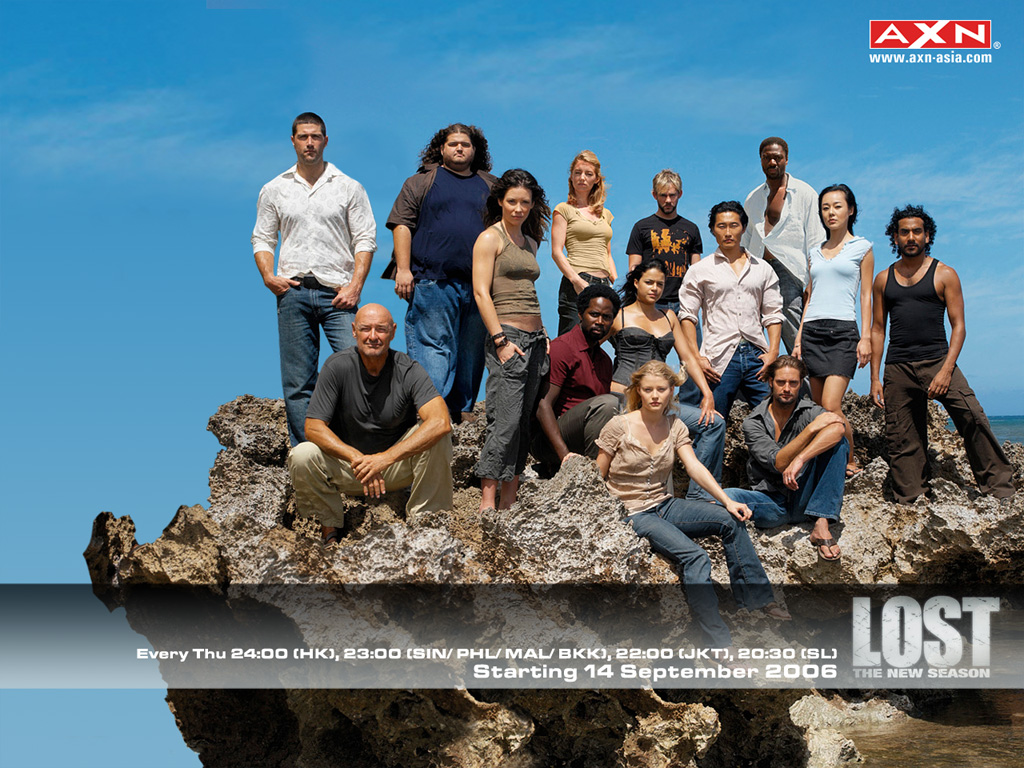
Far too much of our culture fears death so much it offers up only visions of torment or emptiness, a refusal to acknowledge its reality in the ubiquitous depiction of ghosts as "not having moved on". In this final episode, we have the depiction, not of purgatory, but rather the mind's coming to terms with the reality of death - going to the great length of creating an entire life as a defense against the reality. Bringing full circle not just the major cast players, but Juliette's dying words to Sawyer in the first episode, "It worked." Exploding the bomb did, indeed, work. It just didn't work in the way anyone thought.
I also think that Hugo was the only real choice for caretaker. He may have been a slightly slack, clueless bumbler; as Ben Linus tells him (in one of those moments that show that Ben Linus was more than a sociopath), Hugo will do well as long as he does what he does well, take care of people. That is what Hurley always did. Taking care of the island, running things not as Jacob did - some secret society with ever-descending spirals of understanding and knowledge. His constant demand for openness, his various ploys - from the Golf Course to the con on Sawyer to the demand for funerals for those who died - all show that in hi heart, Hugo cared not a fig for the deeper ways of the island. All he cared about was people.
All in all, this final season, with its twin story lines closed the final circle, answered the only question worth asking with a chuckle ("yes, the island is real, you dope"), and saw in the lives of the survivors of Oceanic 815 that most fleeting and rare of experiences - lives lived more fully and honestly (even in deceit) than might otherwise have been. Who they were before; who they were after they left (those few who did) did not matter. Sawyer and Kate and Claire get off the island, yet, as Christian tells Jack, the time spent on the island was the most important thing any of them ever did. Who knows how those three lived, and perhaps even loved, once they had gone; in death, they find themselves returning to those people whom they loved at that time, because their living, and their loving, was far more real than anything before or after.
I will admit that, even more than the moment Jin and Sun realize what is happening (and the moment this viewer understood, too, what was happening), the moment when Juliette and Sawyer meet at the vending machine and realize what is happening, I got teary.
Finally, I have to say that ending the series this way, for me, makes of it what it has always seemed to me to be - a variant on that 19th century serialized novel, appearing not in monthly installments, but yearly ones. Tying up all those odd loose ends in a way that always left the reader surprised was a feature of those particular ways of story-telling (consider the very final chapter of Crime and Punishment as emblematic of the type). With this ending, the creators achieved what they set out - to tell a complete story, from beginning to end, making of series television something more than it might otherwise have been.
Monday, September 27, 2010
The United Methodist Church - Older, Whiter, And Needing A Guide For The Future
I started seminary 20 years ago this month. At the time, aged 25, I was definitely on the low end of the age Bell-Curve for seminary students. Many if not most of the students were second-career individuals, in their mid-40's or older, and were recently returned to the church. Wesley, like many seminaries, actively recruited second-career students in part because of the declining numbers of young people hearing a call to ministry.
In the late 1990's, I attended, along with my wife, a meet-and-greet with the new Bishop of the Virginia Annual Conference. That Conference, the largest in the denomination, has 18 Districts, and the Bishop was moving to each district, talking about his vision for the Conference. As I sat and listened to the bland statements being uttered, I looked at the clergy around me. Most were older, almost all were men, and all of them - ALL of them - were white. The Petersburg District included both Sussex and Greensville Counties, two majority-black counties. Brunswick and Dinwiddie Counties had substantial African-American populations. Not a single black church, historical or new. I mentioned this fact during Q&A. The result was no one sat with Lisa and me at the lunch break.
These general ruminations are the beginning of my thinking sparked by an email my wife forwarded to me:
While we can discuss all sorts of reasons, from demographic shifts to the failures of the hierarchy, to the failures of individual ministers, to the general decline in church attendance and religion in general in the United States, there still remains open the question of how we move forward, constructively, as a denomination?
Part of this, I think begins with understanding who we are. Part of it is instilling an understanding, and even a pride, in our Wesleyan heritage, the many contributions important and influential church leaders, theologians, bishops, and others have made to making our country a better place.
Another factor that needs to be addressed is our ministry to youth and young adults. It is pretty much settled that, even if an individual was raised going to church, between the ages of 18 and 30, church attendance declines substantially. After people settle in to careers and families, they start to trickle back. If we had serious, thoughtful, engaging youth ministry and ministry for young adults, we might just see a change. Not a substantial change; there are too many social and cultural factors that just wouldn't make that possible. Yet, if we could retain in active participation just a small percentage of the young people who go through youth ministry programs, and have waiting for them young adult ministry programs that meet their needs, the effects could become a multiplier.
With more young adults staying active in church, being involved in its ministries, the understanding of a call to ministry might come sooner than mid-life. More young people going to seminary and becoming local pastors under appointment would, in turn, not only reduce the potential burden on pensions and a ministerial drought; it would also provide a resource for new ideas. It would show other young people at the local level that there might just be something to this whole "church" thing, reducing the drop-off rate even a little bit further.
It starts, I think, with having serious, substantive, yet also engaging youth and young adult ministries. This is the crucial point in the lives of young people. Too much of our youth ministry is faddish, or rooted in an approach that denies the legitimacy of the very real question young people have regarding the relevance of God in their lives in the early 21st century. We need to be open to exploring the Bible with youth. We need to talk about sex and drugs. We need to talk about race and war. Most of all we need to provide a space for our young people to come and talk about these matters in a way that affirms their questions without dodging them.
We also need to be more serious about cross-cultural ministry. We need to give more than lip service to expanding our local church's potential membership by reaching out to the growing Mexican and Latino communities; to other geographically specific minority groups (it might be south Asians in Michigan, or Cambodians and Laotians in southern California).
Finally, on this matter, we need to address the very real problem of structural racism in the denomination and the individual bigotry of clergy. It is not enough to point to historically black United Methodist congregations; it is not enough to point to the recruitment of minority clergy and lay leaders; it is not enough to talk about this or that mission project in a community with a different racial or ethnic identity. We need to stand up and say, without fear, that there is still much work to be done to address the whole question of race in the United Methodist Church, both at an institutional level and at the level of the attitudes of local clergy.
In the late 1990's, I attended, along with my wife, a meet-and-greet with the new Bishop of the Virginia Annual Conference. That Conference, the largest in the denomination, has 18 Districts, and the Bishop was moving to each district, talking about his vision for the Conference. As I sat and listened to the bland statements being uttered, I looked at the clergy around me. Most were older, almost all were men, and all of them - ALL of them - were white. The Petersburg District included both Sussex and Greensville Counties, two majority-black counties. Brunswick and Dinwiddie Counties had substantial African-American populations. Not a single black church, historical or new. I mentioned this fact during Q&A. The result was no one sat with Lisa and me at the lunch break.
These general ruminations are the beginning of my thinking sparked by an email my wife forwarded to me:
New research from the Lewis Center on Church Leadership reveals two facts about the UMC that have been part of the church's struggle for many years.Like the rest of the old mainline churches, the UMC saw a substantial decline in membership, starting in the 1970's. My home church, once a robust, active congregation with over 400 members and, at its peak when I was in high school, a worship attendance closing in on 200 a week. Less than a quarter century later, that church has ceased to be.
1) The median age of clergy continues to rise very quickly: More than half of elders are age 55 or older. In 2000, the midway point was age 50, and in 1973, the median was 43.
2) In a nation where racial diversity is increasing, the membership of the UMC is becoming even more white: 90% in 2008, up from 87% in 1998. During that time, according to 2009 Census Bureau figures, non-Hispanic whites decreased from 69% to 65% of the U.S. population.
What does this mean for our church?
While we can discuss all sorts of reasons, from demographic shifts to the failures of the hierarchy, to the failures of individual ministers, to the general decline in church attendance and religion in general in the United States, there still remains open the question of how we move forward, constructively, as a denomination?
Part of this, I think begins with understanding who we are. Part of it is instilling an understanding, and even a pride, in our Wesleyan heritage, the many contributions important and influential church leaders, theologians, bishops, and others have made to making our country a better place.
Another factor that needs to be addressed is our ministry to youth and young adults. It is pretty much settled that, even if an individual was raised going to church, between the ages of 18 and 30, church attendance declines substantially. After people settle in to careers and families, they start to trickle back. If we had serious, thoughtful, engaging youth ministry and ministry for young adults, we might just see a change. Not a substantial change; there are too many social and cultural factors that just wouldn't make that possible. Yet, if we could retain in active participation just a small percentage of the young people who go through youth ministry programs, and have waiting for them young adult ministry programs that meet their needs, the effects could become a multiplier.
With more young adults staying active in church, being involved in its ministries, the understanding of a call to ministry might come sooner than mid-life. More young people going to seminary and becoming local pastors under appointment would, in turn, not only reduce the potential burden on pensions and a ministerial drought; it would also provide a resource for new ideas. It would show other young people at the local level that there might just be something to this whole "church" thing, reducing the drop-off rate even a little bit further.
It starts, I think, with having serious, substantive, yet also engaging youth and young adult ministries. This is the crucial point in the lives of young people. Too much of our youth ministry is faddish, or rooted in an approach that denies the legitimacy of the very real question young people have regarding the relevance of God in their lives in the early 21st century. We need to be open to exploring the Bible with youth. We need to talk about sex and drugs. We need to talk about race and war. Most of all we need to provide a space for our young people to come and talk about these matters in a way that affirms their questions without dodging them.
We also need to be more serious about cross-cultural ministry. We need to give more than lip service to expanding our local church's potential membership by reaching out to the growing Mexican and Latino communities; to other geographically specific minority groups (it might be south Asians in Michigan, or Cambodians and Laotians in southern California).
Finally, on this matter, we need to address the very real problem of structural racism in the denomination and the individual bigotry of clergy. It is not enough to point to historically black United Methodist congregations; it is not enough to point to the recruitment of minority clergy and lay leaders; it is not enough to talk about this or that mission project in a community with a different racial or ethnic identity. We need to stand up and say, without fear, that there is still much work to be done to address the whole question of race in the United Methodist Church, both at an institutional level and at the level of the attitudes of local clergy.
Sunday, September 26, 2010
Credible Threats
It is easy enough to make fun of Bill Kristol's constant calls for the United States to prepare for war with . . . fill-in-the-blank. It's like Tourette's Syndrome. He can't help himself.
Let us, for the moment, set aside the temptation to either ignore him or laugh at him or roll our eyes at him, or feel icky because he is so casual in his preference for violence. Some questions that aren't asked might be in order.
Let us consider his statements on the merits. His argument is that if the United States threatened war, or even some kind of military strike short of all-out war, with Iran, it would be induced to act in ways that are more amenable to our interests. I would ask him a simple question - why should Iran consider the United States a credible threat? Currently painfully extricating ourselves from a long, bloody occupation of Iraq that was ill-conceived, poorly planned, with no thought given to what would happen once the initial combat was over and we became an occupying force, Iran has plenty of evidence on its doorstep as to what our military is and is not capable of. On its other border, we are bogged down in Afghanistan, like pretty much every major power since Alexander the Great has been.
We are economically weak, militarily and strategically stretched almost to the breaking point, and would be if we actually carried out military operations in Iran, acting without any diplomatic cover whatsoever. Furthermore, it would seriously undermine our relations with Russia, of far greater import for any number of reasons than any benefit we might potentially gain from ending (if it were possible) the revolutionary rule in Iran.
What Kristol fail to understand - for reasons either of ignorance of simple stupidity - is that any threat of military action has to be credible. With the possible exception of launching some cruise missiles and attacks from remote-controlled drones, not to mention the unthinkable use of nuclear weapons, our threats just aren't credible. Half-measures, such as remote attacks by missile, would only bring down the wrath of most of the world upon us. The use of nuclear weapons might provoke a response that even Kristol, with his measured disdain for world opinion, would not like. How would it feel to instantly become a pariah, perhaps even the target of a concerted effort on the part of the world community to undermine our government?
Any threat of action has to be, at the very least, credible. Right now, ours would not be.
Let us, for the moment, set aside the temptation to either ignore him or laugh at him or roll our eyes at him, or feel icky because he is so casual in his preference for violence. Some questions that aren't asked might be in order.
Let us consider his statements on the merits. His argument is that if the United States threatened war, or even some kind of military strike short of all-out war, with Iran, it would be induced to act in ways that are more amenable to our interests. I would ask him a simple question - why should Iran consider the United States a credible threat? Currently painfully extricating ourselves from a long, bloody occupation of Iraq that was ill-conceived, poorly planned, with no thought given to what would happen once the initial combat was over and we became an occupying force, Iran has plenty of evidence on its doorstep as to what our military is and is not capable of. On its other border, we are bogged down in Afghanistan, like pretty much every major power since Alexander the Great has been.
We are economically weak, militarily and strategically stretched almost to the breaking point, and would be if we actually carried out military operations in Iran, acting without any diplomatic cover whatsoever. Furthermore, it would seriously undermine our relations with Russia, of far greater import for any number of reasons than any benefit we might potentially gain from ending (if it were possible) the revolutionary rule in Iran.
What Kristol fail to understand - for reasons either of ignorance of simple stupidity - is that any threat of military action has to be credible. With the possible exception of launching some cruise missiles and attacks from remote-controlled drones, not to mention the unthinkable use of nuclear weapons, our threats just aren't credible. Half-measures, such as remote attacks by missile, would only bring down the wrath of most of the world upon us. The use of nuclear weapons might provoke a response that even Kristol, with his measured disdain for world opinion, would not like. How would it feel to instantly become a pariah, perhaps even the target of a concerted effort on the part of the world community to undermine our government?
Any threat of action has to be, at the very least, credible. Right now, ours would not be.
Subscribe to:
Posts (Atom)
Virtual Tin Cup
