Thursday, September 30, 2010

Responsibility

I've been thinking a whole lot about the suicide of Terry Clementi. I've been thinking about my anger at the stupid, thoughtless roommate whose "prank" led Clementi to take his own life. I've thought about the whole online culture in which, as I recently heard in a discussion on NPR, there is no longer an expectation of privacy among people who have grown up on MySpace and now Facebook and Twitter. Since they don't expect it, they feel no need to grant it to others.

I have been thinking about who, or what, is responsible. Can we just lay this at the feet of Tyler Clementi, pushed too far, panicking at the response of his family and loved ones if news got out? Can we lay this at the feet of his chuckle-head roommate, who gathered a group to sit and watch as Tyler made out with another man, then posted the video online? Can we lay it at the feet of a culture that no longer understands there is a wall between private and public? Did Ravi see no difference between what he was doing and the millions of people who tune in to Jersey Shore and the various Real Housewives programs?

I also have been thinking, again, about Tony Kushner's infamous/famous article in The Nation, written in response to the murder of Matthew Shepard.
A lot of people worry these days about the death of civil discourse, and would say that I ought not call the Pope a homicidal liar, nor (to be ecumenical about it) the orthodox rabbinate homicidal liars, nor Trent Lott a disgusting opportunistic hatemonger. But I worry a lot less about the death of civil discourse than I worry about being killed if, visiting the wrong town with my boyfriend, we forget ourselves so much as to betray, at the wrong moment in front of the wrong people, that we love one another. I worry much more about the recent death of the Maine antidiscrimination bill, and about the death of the New York hate crimes bill, which will not pass because it includes sexual orientation. I worry more about the death of civil rights than civil discourse. I worry much more about the irreversible soul-deaths of lesbian, gay, bisexual, transgendered children growing up deliberately, malevolently isolated by the likes of Trent Lott and Newt Gingrich than I worry about the death of civil discourse. I mourn Matthew Shepard's actual death, caused by the unimpeachably civil "we hate the sin, not the sinner" hypocrisy of the religious right, endorsed by the political right, much more than I mourn the lost chance to be civil with someone who does not consider me fully a citizen, nor fully human. I mourn that cruel death more than the chance to be civil with those who sit idly by while theocrats, bullies, panderers and hatemongers, and their crazed murderous children, destroy democracy and our civic life. Civic, not civil, discourse is what matters, and civic discourse mandates the assigning of blame.

If you are lesbian, gay, transgendered, bi, reading this, here's one good place to assign blame: The Human Rights Campaign's appalling, post-Shepard endorsement of Al D'Amato dedicates our resources to the perpetuation of a Republican majority in Congress. The HRC, ostensibly our voice in Washington, is in cahoots with fag-bashers and worse. If you are a heterosexual person, and you are reading this: Yeah yeah yeah, you've heard it all before, but if you have not called your Congressperson to demand passage of a hate crimes bill that includes sexual orientation, and e-mailed every Congressperson, if you have not gotten up out of your comfortable chair to campaign for homosexual and all civil rights--campaign, not just passively support--may you think about this crucified man, and may you mourn, and may you burn with a moral citizen's shame. As one civilized person to another: Matthew Shepard shouldn't have died. We should all burn with shame.
Hard words. Prophetic words, too. Rather than lash out at the Ravis of this world, maybe I, for one, should look inside and realize I haven't seen enough of this to really get angry enough. This one event is horrible enough. The endemic nature of maltreatment of sexual minorities, in particular sexual-minority youth, demands more than just anger, even angry words.

It demands we do something about this. It needs to stop. People are dying. I don't care one whit whether or not it is line with Christian teaching, or western traditions, or whatever argument one wishes to make. Real people are dying because some people think it is OK to treat other human beings as less worthy, less acceptable just because they don't love the way most of the rest of us do.

Maybe God really doesn't sanction gay marriage. Maybe being gay is akin to being a murderer, or a pedophile in the eyes of God. My only response to that is, if that is so, I will still insist that we need to work to stop this. People are dying. Young men and women are drinking and drugging and cutting themselves and jumping to their deaths because they feel cast aside - by their families, their peers, and their churches. Their lives are far more important to me than whether or not I am "correct" in reading a Bible passage.

To blame or not to blame? Not quite sure where to go with that. Responsibility, though, starts with the only person whose life I can control completely - me.

Wednesday, September 29, 2010

More Horrible People

Another submission in the whole theme for today, "We Suck As A People":
According to reports, Ravi was Clementi's roommate in a dorm on the university's New Brunswick campus. On his Twitter account, Ravi wrote about turning on his computer by remote on Sept. 19 to watch Clementi:

"Roommate asked for the room till midnight. I went to molly's room and turned on my webcam. I saw him making out with a dude. Yay."

In a later Twitter posting, he apparently invited others to watch with him:

"Anyone with iChat, I dare you to video chat me between the hours of 9:30 and 12. Yes it's happening again."

iChat allows its users to share live audio and video while instant messaging over computers.
The "Clementi" in question, 18 year-old Rutgers frosh Tyler Clementi, found out what happened and jumped off the George Washington Bridge.

I know the law doesn't allow it, but I would love to find Ravi and beat the shit out of him. I am so disgusted right now.

What We Say Matters

For the first time in years, I have joined - albeit tentatively - a blog-community. Author John Shore has a marvelous website, with an engaged, thoughtful community interacting on any number of topics.

A takeaway from my own recent experiences there is one of reinforcement. My own sense that what we say, how we live our lives, matters, is supported by a series of posts John has done recently on the relationship between Christianity and being gay. I have often said that I do not take myself very seriously at all; I do take the subject matter with which I deal very seriously, however, because it deals with life and death stuff, people's lives. Even my occasional forays in to issues of art - literature and music and film - fall in to this category because our art tells us who we are. This stuff matters. It is life and death stuff.

While bloggers are still the target of all sorts of disdain, we should never lose sight of the reality that we are just people. Yet, we are precisely people who are doing stuff that matters. It matters because we are talking about life and love and fear. Our words reach the whole world, whether we know it or not.

My hope and prayer is that we remember, each and every day, that the stuff we say matters. People can live or die because of stuff we say. It's a really tremendous responsibility to put our words out there for everyone to see. Even when we are angry, we should express our anger with love, and a sense that it is a righteous anger.

Conduct Unbecoming

My first time through this story left me angry. The second time through I figured that, at the very least, a little light can only help.

Alan, what is up with your state?

Tuesday, September 28, 2010

Stepping Back

I had a great conversation this morning on Facebook with my nephew. At 33, he found himself facing a decision - do I keep my job that is frustrating, unrewarding, yet seems necessary in the face of all our cultural and social anxieties, or do I step back and take the huge risk of doing what I love, which is also what I'm good at?

I had a discussion with a church member on Sunday kind of on the same topic. We hadn't had the chance to chat much over the previous couple months, and I was telling him about going part-time at work. I made an observation that really just kind of popped in to my head, but it has a ring of truth about it that I just can't shake. I said that, while I hated to use the word, making the decision to take a step back from the general anxieties we all face concerning the economy and deciding to free oneself from these shackles is counter-cultural. While I recognize that I have certain advantages that allow this decision - a wife that has a career that provides a certain economic cushion and benefits as well - I think that even if this were not the case, making this decision in train with the conscientious decision to make do with less could have been made.

At this particular historical moment, with so much in flux, so much uncertain, it seems to so many people almost crazy to just stop and get off the crazy train. Yet, these very reasons make it necessary that now is that time. I feel more free, more at peace, even as I understand that risks are so much greater now than at some other time. I feel alive, really.

I haven't really dealt much here with the anxiety and frustration with which I was plagued as I went round and round on the question of "What should I do?". Talking with my nephew and the gentleman from church, however, I am more convinced than ever that the decision is right. More than any other feeling, what I feel right now is . . . free. Make it or not, correct or not, I feel free. The rules that say we are restricted by circumstances cannot be defied unless they are . . . defied.

What is most surprising, and pleasing, is how many folks at work have said to me, "Gee, if I could go part time, I would." My response to all of them is the same - "You can do it." Living one's life as a demonstration of what is possible feels good, I suppose. Being free, though . . . that feels like really living.

Circular Firing Squads

I stopped reading Jane Hamsher's website, Fire Dog Lake, a few years back. Ditto Glenn Greenwald. In both cases, I started to detect that most endemic of left-wing traits - taking fellow-travelers to task for alleged deviations from the true path as a greater threat to all that is good and true in the world than one's actual political opponents. Mix in a heady stew of chutzpah, hubris, and the sense of entitlement that comes from being feted as a "player" in this medium (as well, in Greenwald's case, as an ego roughly the size of Belgium), and the results can be pretty ugly.

Consider this post by John Cole, reporting on an attempt by Jane Hamsher to smear him that goes, well, slightly wrong. In the midst of a long comment thread that deals with details of Cole's alleged deviations from leftist orthodoxy as well as Hamsher's well self-publicized position that it would have been better to scrap the health care reform bill as it was written than to pass it, we have a marvelous summary of one of the many weaknesses of the left, complete with some ad hominem to keep one reading:
Here’s something that simple-minded twits like you are almost wholly incapable of understanding. Just because the Affordable Care Act does not contain every dream measure liberals wanted included in the final bill, that does not somehow mitigate the final legislation from having a sizable and very tangible impact in the day-to-day lives of millions of Americans. It’s a victory that, although incomplete, is still entirely worth celebrating.

That you could be so gleeful and obtuse in demagoguing something that is providing long-sought after relief to your fellow citizens is a rather shameful display.
This latter position - that we are actually worse off with the passage of the Affordable Care Act than we were before - is simply not supported by the facts. One can believe it in the same way people believe there is no such thing as global warming, or believe in the tooth fairy. One can believe it so passionately that one is quite willing to jettison even more facts in support of the notion that ACA is nothing more or less than a corporate sell-out, was always planned to be a corporate sell-out, and that no one except the American people wanted a better bill.

Too sad. Those so passionately committed to a particular policy goal can become too blind to notice that progress - tremendous, beneficial progress for millions of Americans - has actually been achieved by our broken, limited system of governance.

This whole episode is very tragic. It is also just more evidence (as if any were needed) that the American left is constitutionally incapable of gaining, let alone wielding, power in an effective manner. When matters of process and procedure, attaining limited half-measures in pursuit of longer-term goals that are more generous, and highlighting the passage of the most significant piece of social legislation since I was a baby seem to be worse crimes than believing the President is a terrorist-pal, Muslim-liberation theologian-Marxist bent on destroying white America and making Amiri Baraka our poet laureate - well, as far as I'm concerned those folks cease to function as serious thoughtful commenters on our public life.

I have no desire to deny that I would have much preferred all sorts of good things in HCR. I also see the many good things that are in the ACA as it passed, and celebrate them. For some, it is just easier to pout, then shout, because one's own toys weren't included in the gift-giving, and blame all those phony fake-liberals for destroying this moment of victory for all the good things in this world.

Politics is a dirty, nasty business, and one should take one's victories where and when they actually come, rather than as we wish they had.

The Choice

In reading Matt Taibbi's latest piece in Rolling Stone I found a paragraph that sets before readers what is at stake with these mid-term elections.
You look into the eyes of these people when you talk to them and they genuinely don't see what the problem is. It's no use explaining that while nobody likes the idea of having to get the government to tell restaurant owners how to act, the Civil Rights Act of 1964 was the tool Americans were forced to use to end a monstrous system of apartheid that for 100 years was the shame of the entire Western world. But all that history is not real to Tea Partiers; what's real to them is the implication in your question that they're racists, and to them that is the outrage, and it's an outrage that binds them together. They want desperately to believe in the one-size-fits-all, no-government theology of Rand Paul because it's so easy to understand. At times, their desire to withdraw from the brutally complex global economic system that is an irrevocable fact of our modern life and get back to a simpler world that no longer exists is so intense, it breaks your heart.
This yearning for simplicity, this primitivism, this fear which expresses itself in a rage against the Other, against those forces that push and pull us in ways we neither understand nor like, is certainly much of the attraction of the Tea Party and its candidates. Fear an oversexualized culture? Christine O'Donnell is there insisting that even masturbation should be subject to a disciplined life. Confused about the tax system? Rand Paul is there saying you are overtaxed. Wondering why there seems to be more concern for so many in places other than where we live, where we are hurting and afraid? So many candidates are saying that illegal immigrants are taking our jobs, our tax money in the form of public education for their children and emergency health care paid for by Medicaid.

It isn't that these answers are wrong. They kick against the pricks of our current reality. Yes, it is frightening that events in a far off country, perhaps one of which we had never heard, can end up costing us our jobs, our homes, our sense of security. This doesn't make it any less real; unplugging from this weird machine, while certainly an attractive possibility, isn't really tenable (regulating it in a more just, scrupulous, and judicious manner, however, is another matter).

Should the unlikely happen and the Republicans gain control of the House of Representatives (the Senate is just too far out of reach), the agenda for at least the next two years will consist of items that have nothing to do with the way our world is really constructed. We will wage fights, post items on FB and our blogs, on subjects that are, at best, tangential to the ongoing realities of economic stagnation and social malaise.

I am not saying that retaining a Democratic majority guarantees butterflies and rainbows. On the contrary, all the evidence from the past four years should convince anyone not yet convinced that, even at their best, the Democrats can be said to muddle through. All the same, the forces of reaction and fear, the desire to shrug off our contemporary lot for some idyll of our imagination is a recipe not just for disaster, but perhaps even collapse. So, we have the horrid choice before us - those who have the minimal virtue of keeping the worst of possible worlds from coming to fruition without making any progress; or, chuck it all and find ourselves staring in to a very real, very horrid abyss that stares back.

Found

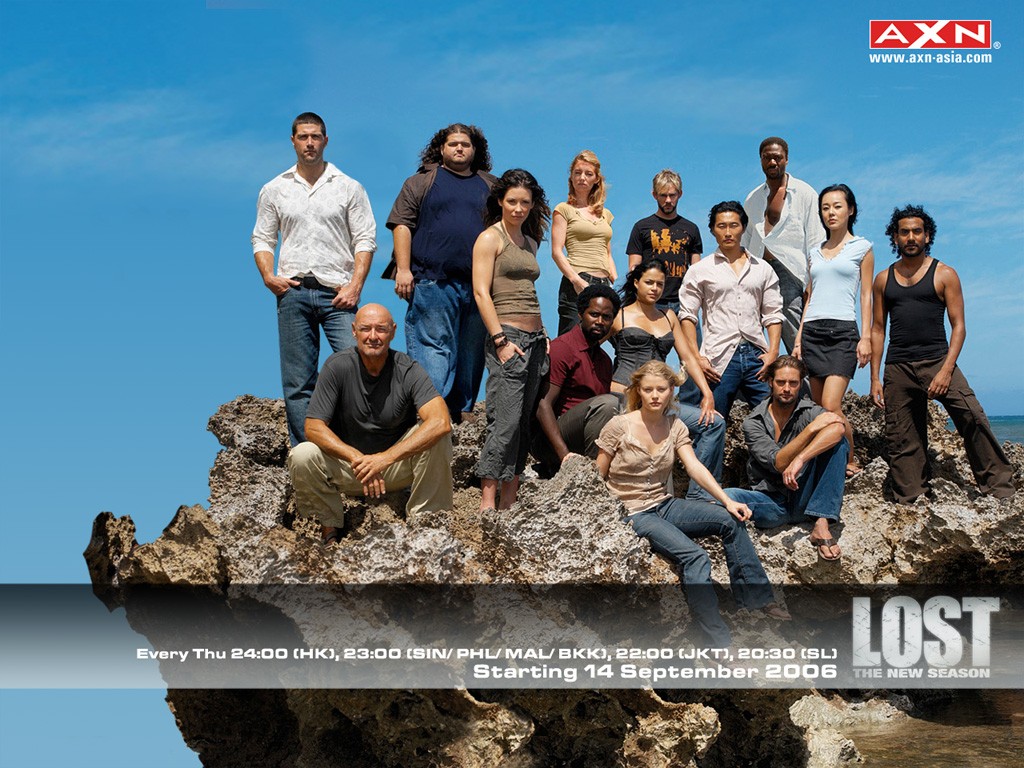
I have now seen the final season, and final episode, of Lost. I think it safe to say that, unlike far too many people, I found it not just satisfying, but moving.

Far too much of our culture fears death so much it offers up only visions of torment or emptiness, a refusal to acknowledge its reality in the ubiquitous depiction of ghosts as "not having moved on". In this final episode, we have the depiction, not of purgatory, but rather the mind's coming to terms with the reality of death - going to the great length of creating an entire life as a defense against the reality. Bringing full circle not just the major cast players, but Juliette's dying words to Sawyer in the first episode, "It worked." Exploding the bomb did, indeed, work. It just didn't work in the way anyone thought.

I also think that Hugo was the only real choice for caretaker. He may have been a slightly slack, clueless bumbler; as Ben Linus tells him (in one of those moments that show that Ben Linus was more than a sociopath), Hugo will do well as long as he does what he does well, take care of people. That is what Hurley always did. Taking care of the island, running things not as Jacob did - some secret society with ever-descending spirals of understanding and knowledge. His constant demand for openness, his various ploys - from the Golf Course to the con on Sawyer to the demand for funerals for those who died - all show that in hi heart, Hugo cared not a fig for the deeper ways of the island. All he cared about was people.

All in all, this final season, with its twin story lines closed the final circle, answered the only question worth asking with a chuckle ("yes, the island is real, you dope"), and saw in the lives of the survivors of Oceanic 815 that most fleeting and rare of experiences - lives lived more fully and honestly (even in deceit) than might otherwise have been. Who they were before; who they were after they left (those few who did) did not matter. Sawyer and Kate and Claire get off the island, yet, as Christian tells Jack, the time spent on the island was the most important thing any of them ever did. Who knows how those three lived, and perhaps even loved, once they had gone; in death, they find themselves returning to those people whom they loved at that time, because their living, and their loving, was far more real than anything before or after.

I will admit that, even more than the moment Jin and Sun realize what is happening (and the moment this viewer understood, too, what was happening), the moment when Juliette and Sawyer meet at the vending machine and realize what is happening, I got teary.

Finally, I have to say that ending the series this way, for me, makes of it what it has always seemed to me to be - a variant on that 19th century serialized novel, appearing not in monthly installments, but yearly ones. Tying up all those odd loose ends in a way that always left the reader surprised was a feature of those particular ways of story-telling (consider the very final chapter of Crime and Punishment as emblematic of the type). With this ending, the creators achieved what they set out - to tell a complete story, from beginning to end, making of series television something more than it might otherwise have been.

Monday, September 27, 2010

The United Methodist Church - Older, Whiter, And Needing A Guide For The Future

I started seminary 20 years ago this month. At the time, aged 25, I was definitely on the low end of the age Bell-Curve for seminary students. Many if not most of the students were second-career individuals, in their mid-40's or older, and were recently returned to the church. Wesley, like many seminaries, actively recruited second-career students in part because of the declining numbers of young people hearing a call to ministry.

In the late 1990's, I attended, along with my wife, a meet-and-greet with the new Bishop of the Virginia Annual Conference. That Conference, the largest in the denomination, has 18 Districts, and the Bishop was moving to each district, talking about his vision for the Conference. As I sat and listened to the bland statements being uttered, I looked at the clergy around me. Most were older, almost all were men, and all of them - ALL of them - were white. The Petersburg District included both Sussex and Greensville Counties, two majority-black counties. Brunswick and Dinwiddie Counties had substantial African-American populations. Not a single black church, historical or new. I mentioned this fact during Q&A. The result was no one sat with Lisa and me at the lunch break.

These general ruminations are the beginning of my thinking sparked by an email my wife forwarded to me:
New research from the Lewis Center on Church Leadership reveals two facts about the UMC that have been part of the church's struggle for many years.

1) The median age of clergy continues to rise very quickly: More than half of elders are age 55 or older. In 2000, the midway point was age 50, and in 1973, the median was 43.

2) In a nation where racial diversity is increasing, the membership of the UMC is becoming even more white: 90% in 2008, up from 87% in 1998. During that time, according to 2009 Census Bureau figures, non-Hispanic whites decreased from 69% to 65% of the U.S. population.

What does this mean for our church?
Like the rest of the old mainline churches, the UMC saw a substantial decline in membership, starting in the 1970's. My home church, once a robust, active congregation with over 400 members and, at its peak when I was in high school, a worship attendance closing in on 200 a week. Less than a quarter century later, that church has ceased to be.

While we can discuss all sorts of reasons, from demographic shifts to the failures of the hierarchy, to the failures of individual ministers, to the general decline in church attendance and religion in general in the United States, there still remains open the question of how we move forward, constructively, as a denomination?

Part of this, I think begins with understanding who we are. Part of it is instilling an understanding, and even a pride, in our Wesleyan heritage, the many contributions important and influential church leaders, theologians, bishops, and others have made to making our country a better place.

Another factor that needs to be addressed is our ministry to youth and young adults. It is pretty much settled that, even if an individual was raised going to church, between the ages of 18 and 30, church attendance declines substantially. After people settle in to careers and families, they start to trickle back. If we had serious, thoughtful, engaging youth ministry and ministry for young adults, we might just see a change. Not a substantial change; there are too many social and cultural factors that just wouldn't make that possible. Yet, if we could retain in active participation just a small percentage of the young people who go through youth ministry programs, and have waiting for them young adult ministry programs that meet their needs, the effects could become a multiplier.

With more young adults staying active in church, being involved in its ministries, the understanding of a call to ministry might come sooner than mid-life. More young people going to seminary and becoming local pastors under appointment would, in turn, not only reduce the potential burden on pensions and a ministerial drought; it would also provide a resource for new ideas. It would show other young people at the local level that there might just be something to this whole "church" thing, reducing the drop-off rate even a little bit further.

It starts, I think, with having serious, substantive, yet also engaging youth and young adult ministries. This is the crucial point in the lives of young people. Too much of our youth ministry is faddish, or rooted in an approach that denies the legitimacy of the very real question young people have regarding the relevance of God in their lives in the early 21st century. We need to be open to exploring the Bible with youth. We need to talk about sex and drugs. We need to talk about race and war. Most of all we need to provide a space for our young people to come and talk about these matters in a way that affirms their questions without dodging them.

We also need to be more serious about cross-cultural ministry. We need to give more than lip service to expanding our local church's potential membership by reaching out to the growing Mexican and Latino communities; to other geographically specific minority groups (it might be south Asians in Michigan, or Cambodians and Laotians in southern California).

Finally, on this matter, we need to address the very real problem of structural racism in the denomination and the individual bigotry of clergy. It is not enough to point to historically black United Methodist congregations; it is not enough to point to the recruitment of minority clergy and lay leaders; it is not enough to talk about this or that mission project in a community with a different racial or ethnic identity. We need to stand up and say, without fear, that there is still much work to be done to address the whole question of race in the United Methodist Church, both at an institutional level and at the level of the attitudes of local clergy.

Sunday, September 26, 2010

Credible Threats

It is easy enough to make fun of Bill Kristol's constant calls for the United States to prepare for war with . . . fill-in-the-blank. It's like Tourette's Syndrome. He can't help himself.

Let us, for the moment, set aside the temptation to either ignore him or laugh at him or roll our eyes at him, or feel icky because he is so casual in his preference for violence. Some questions that aren't asked might be in order.

Let us consider his statements on the merits. His argument is that if the United States threatened war, or even some kind of military strike short of all-out war, with Iran, it would be induced to act in ways that are more amenable to our interests. I would ask him a simple question - why should Iran consider the United States a credible threat? Currently painfully extricating ourselves from a long, bloody occupation of Iraq that was ill-conceived, poorly planned, with no thought given to what would happen once the initial combat was over and we became an occupying force, Iran has plenty of evidence on its doorstep as to what our military is and is not capable of. On its other border, we are bogged down in Afghanistan, like pretty much every major power since Alexander the Great has been.

We are economically weak, militarily and strategically stretched almost to the breaking point, and would be if we actually carried out military operations in Iran, acting without any diplomatic cover whatsoever. Furthermore, it would seriously undermine our relations with Russia, of far greater import for any number of reasons than any benefit we might potentially gain from ending (if it were possible) the revolutionary rule in Iran.

What Kristol fail to understand - for reasons either of ignorance of simple stupidity - is that any threat of military action has to be credible. With the possible exception of launching some cruise missiles and attacks from remote-controlled drones, not to mention the unthinkable use of nuclear weapons, our threats just aren't credible. Half-measures, such as remote attacks by missile, would only bring down the wrath of most of the world upon us. The use of nuclear weapons might provoke a response that even Kristol, with his measured disdain for world opinion, would not like. How would it feel to instantly become a pariah, perhaps even the target of a concerted effort on the part of the world community to undermine our government?

Any threat of action has to be, at the very least, credible. Right now, ours would not be.

Saturday, September 25, 2010

The Super Rich

Matt Ygelsias has a chart featuring the four wealthiest Americans. At the top sits Bill Gates, with a combined net worth of $54 billion, followed by Warren Buffet, Larry Ellison, and Christy Walton. Yglesias points out that the gap, even here at the very high end, is enormous. Gates' net worth is more than twice Walton's; Buffett's is just shy. Consider that for a moment. The two wealthiest individuals in the United States are each worth twice the fourth wealthiest.

Yglesias asks what would happen should any of these individuals intervene in politics in a "heavy handed way", which prompts all sorts of outrage among his commenters, who mis the point. I doubt Yglesias is naive enough to believe that these folks don't intervene. In particular, consider Christy Walton. Heir of Sam Walton, her wealth is due in large part to Wal-Mart. Wal-Mart impacts all sorts of economic issues, usually at the local and state level, although their anti-union stance combined with their national presence and enormous resources dedicated to keeping Wal-Mart union-free are a huge factor in keeping labor organization stymied.

All the same, while several comments note that both Gates and Buffett in particular have set up philanthropic organizations to deal with all sorts of social concerns - poverty, women's rights and health, and others - my guess is Yglesias is asking what would happen if, say Bill Gates simply offered up half his net worth - some $27 billion - in a bid to transform our politics. In the first place, he would drop from first to third place on the list, but still have an immense amount of resources with which to do all sorts of philanthropic projects. In the second place, it would create a situation almost without parallel in our history (I say almost, because, at one point during one of the "panics" of the late 19th century, the US government received a loan from financier and steel magnate J. P. Morgan to prevent insolvency).

At a practical, less hypothetical level, we should probably concern ourselves less with these individuals - for all their truly obscene personal wealth fascinates and inspires us - and those far more mundane and relatively common folks, still at the higher end of the income scale, who insist that even having a combined annual income near half a million dollars is not enough to deal with our current economic troubles. Therefore, it seems, we should not be asking of those who can afford to do so to contribute a larger portion of their income so that all of us (including them) can be more economically secure.

That is the question at issue as the Republicans insist that allowing the tax rates to resume their Clinton-era levels, for those who earn $250,000 or more a year, will be a drag on the economy. Please recall, they argued this in 1993. A partial result of the passage of the Clinton-era tax policies was a more robust and sane fiscal outlook, not the least including the elimination of the operating deficit and the prospect, should those surpluses have been allowed to continue, of the eventual elimination of our federal obligations. It seems to me that, quite apart from questions of what would happen if Bill Gates paid every voter in America $100 to vote for his preferred candidates (a pittance, really, of roughly $1.5 billion), we need to be asking this question in light of certain facts.

Friday, September 24, 2010

That Primal Cry

At its best, and perhaps most romantic, interpretation, music is the attempt to leave more than some ephemeral mark upon the Universe. Our passing through this life - it can be meaningless, violent, short.

Or, we can do some thing, some dark matter that cannot be defined, cannot even be named, yet makes its presence known through what it does. Even as we pass, that moment, that transcendent point, declares "I am I know". And it can last forever.

Racism Has Not Gone Away

What too often gets lost in discussions of race and racism is what, in fact, racism is. Racism is not primarily concerned with an individual's feelings or opinions on the status of people of other races. Thus, for example, when Robert Byrd died, I had a conservative blogger challenge me on the difference between Byrd, a former KKK member, and Jesse Helms. Now, I do not know, nor do I really care all that much, what Byrd thought about African-Americans on a personal level. Nor do I really care all that much about what Helms may or may not thought. The difference - and here is where the distinction gets lost - is that one of these two men pursued a career of openness to Civil Rights and the legal and social and political claims of African-Americans after first being opposed to them. The other stood firm in supporting entrenched white power.

Racism is about power. It is about social and political power. Thus, when conservatives point out that, say, black police officers are just as likely to be guilty of racial profile and just as prone to mistreat African-American detainees, this is not a "Ha!" moment. On the contrary, it proves the point that racism is about social power; African-American police officers, by acting out against minority prisoners, are demonstrating their willingness to be co-opted by the state power structure. African-Americans are the target of police violence without regard to the individual status of any given officer.

Thus, again, I am hardly impressed with the revelation from White House taped phone conversations during the Johnson Administration that he was pretty free and loose with bigoted comments about blacks. No President did more, except Lincoln, for African-American legal and social and political rights, and he deserves the thanks of all Americans for his political courage on that score.

The recalcitrance of the power structure is remarkable. Talking Points Memo has a story on a hearing before the Civil Rights Commission. Testifying today is former Civil Rights Division Chief Christopher Coates. Appearing without the imprimatur of the Department of Justice (he's still with them, an AUSA), he is arguing that the Bush DOJ sought to apply the Voting Rights Act in a "race-neutral manner." The thing is - the Voting Rights Act is concerned primarily with race. Applying it in a "race neutral manner" does violence to the legislative intent, the spirit, and many of the letters of that law.

The idea that there is a concerted effort among African-Americans to deny poll access to whites is ludicrous. The idea that there is rampant, even systematic, voting fraud in the African-American community is just not borne out by the facts. Yet, the primary motivation for Coates' appearance was to lament the lack of enforcement of a race-neutral approach to the Voting Rights Act. Precisely because the Voting Rights Act, like Affirmative Action, and the Civil Rights Acts of 1957 and 1964, sought to redress particular structural imbalances in matters of access to power, the notion that these laws are to be applied in a "race neutral manner" is simply nonsensical.

Unless you are a white person who feels viscerally threatened by a black person voting.

Thursday, September 23, 2010

Christian

Unlike, say, Pascal, whose words could substitute for many a modern who faces the hazards of confession weighed against the many voices of our contemporary life that call even the possibility in to question, I see no reason to think of my faith as a way of hedging my bets. The reason is simple. Being a Christian isn't about weighing options. It isn't about considering one set of interpretive lenses, or way of living, against another, considering the costs and benefits, and moving forward.

Of course, I would also say that I don't agree with Kierkegaard and his 20th century great-grandchildren. That is to say, being a Christian isn't some kind of unfathomable leap in to the unknown. It is ridiculous to argue that, after all the hemming and hawing, all that's left is taking that step off the ledge in to the unknown, wondering if the abyss has a bottom, or if there will be a hand to save us before we find out the hard way.

I am a Christian because I have been touched in my life by the grace of God, understand that in Jesus Christ, the God who created all that is - black holes and colliding galaxies and bacteria and squirrels and even mosquitoes - was uniquely and fully manifest, willingly suffered the humiliation, rejection, and death meted out as human "justice", and rose to take away the power of those things once for all for all creation.

I have been touched by the communities called churches of which I have been a part all my life. I have been touched by individuals who gave me a word of grace, a word of judgment, seen the power of second, third, fourth, fifth chances offered even me, surely one of those who deserve it the least.

I have been touched by the realization that, quite beyond any native capacity I possess, I have reached out and touched the lives of others in ways that humble me. It is at these moments, when I hear testimony from others concerning the impact of something I have said or done or written that I understand St. Paul's insistence that it isn't him doing this stuff, but Christ within him. See, I know what I can and cannot do, and when I hear people tell me or email me or whatever that I have impacted their lives in a way that is positive, I am astounded.

Being a Christian turns ordinary life - working and sleeping, eating and chatting, shopping and sharing, even loving and arguing - in to something extraordinary. World-transforming. Each and every moment of our lives offers the opportunity for this. Even if we aren't aware of it at the time, as Christians our words and deeds can suddenly find themselves in synch with that great wheel that turns the whole Universe. We have no idea how far-reaching some act of ours might reach; the connections among all of us are so complex that treading carefully, with both love and humility seems a far greater option than not caring a whit and acting as if our lives were our own and no one else's.

Finally, I am a Christian because being claimed by the God who created the Universe, who nevertheless sees in me something important, something eternally vital to the on-going project of making human life truly human, of making this world more truly the world God created it to be, leaves me fumbling around for reasons to reject it, yet finding nothing more than the smiling face of God on the other side of all my excuses. I care not a whit whether being a Christians earns me a pass through the pearly gates or not. What happens once this life is ended is in God's hands; Biblical testimony on this matter seems far more concerned with the final consummation of creation, anyway, than whether or not I walk some ethereal city with streets of gold.

Living for others, in love, under the shadow of the cross, seems to make all the other choices in my life fall in to place. It makes sense of what can seem senseless. It gives meaning to the empty flow of time, the unfurling of the Universe as it unwinds its course. In the faces and voices of others, whether at my elbow or across the reaches of time and distance, I see those whom God loves, and wants to be fully as God intended.

This is my confession. So help me God.

Wednesday, September 22, 2010

Good Cases Make For Great Law

A court in Michigan has tossed out a suit against the Shepard-Byrd Hate Crimes Law brought by an individual and three ministers.
"Plaintiffs do not allege that they have been prosecuted under the Act, that they have been threatened with such prosecution or that they intend to engage in any conduct prohibited by the Act," federal attorneys argued.

So . . . we have a law on the books that seeks to address hate crimes. Four individuals who have not committed any crimes under the act, been prosecuted or threatened with prosecution under that act, insisted the law nevertheless was a direct threat against them. Quite apart from the question of their standing to sue (which, it seems, would be the federal attorney's case in making the above quoted statement), I have to wonder how folks on the right will react to this summary dismissal.

Had any of the four individuals who brought this suit actually been facing prosecution under the law, that would be one thing. For example, if one of the pastors in question had been hauled before a federal District Court for prosecution under the law for a sermon in which he carried on about how evil gay folks are, then, at the very least, the judge could consider - on appeal - whether or not the law violated his First Amendment rights.

Eager for headlines, or perhaps ignorant of how the law works (and hiring lawyers who were willing to take money even though they probably understood the law a little better than the plaintiffs), these folks tried to jump right past the issue of how this law persecutes poor Christian ministers from speaking their minds and insist that it does so even absent any application of the law in specific cases.

Quite apart from the spectacle of Christian ministers (for legal and tax purposes, they are called "Ministers of the Gospel", and I know this because that is how my wife describes herself every year at tax time) insisting that a law punishing hate crimes is anti-Christian because it prevents them from speaking out against sexual minorities, this at least reminds some people that the rule of law has two parts - laws and rules. As soon as some poor minister gets hauled before a court, arrested under the terms of the Act, I might have sympathy for them. As it stands, however, getting all sorts of attention, crying, "Poor, poor pitiful me", even though they aren't poor and are not to be pities is actually quite sad.

(h/t, Chuck Currie)

Tuesday, September 21, 2010

Music - Some New Some Old

I'd been on a self-imposed drought from iTunes. Until yesterday. I bought three complete releases, and here are some clips that show that I am still eclectic as ever. Hope you enjoy them.

Ray LaMontagne, from God Willing and the Creeks Don't Rise, "Repo Man"


Big Elf, from Cheat The Gallows, this is "The Evils of Rock and Roll" (I saw them open for Dream Theater last year, and they are really, really good - Black Sabbath meets Rob Zombie meets early Alice Cooper)


Finally, The Neville Brothers, Live From Planet Earth and they do a kicking version of this song (as if they wouldn't!), "Yellow Moon"

National Rumor-Panic (UPDATE)

Like many liberals, I've been by turns amused and confounded by the persistent oddness of many anti-Obama activists. Whether Tea Party members, Republican members of Congress who are just odd (like Michelle Bachman of Minnesota or Steve King of Iowa), or media figures like Glenn Beck or disgraced ousted Speaker of the House Newt Gingrich, there are mechanisms and forces involved that defy easy categorization. While it is easy enough to rest upon the various anxieties brought on by recession, stubborn unemployment, and the sudden change in major-party leadership at a national level, including having a woman as Speaker of the House and an African-American President, these "causes" or "conditions of possibility" do not account for the persist belief in non-factuals - that the President and his Administration are either, or by turns, communist, socialist, fascist, radical liberation theologians, and Muslims; that the President of the United States was born in Kenya and raised in Madrassas in Indonesia; that he exhibits, in the odd turn of phrase Gingrich used last week, a "Kenyan anti-colonial" ideology.

Nor is it possible to dismiss these persistent public statements as the result of simple ignorance, or racism. It is not "the media's fault", because that would entail blaming not just those channels of information that reinforce these odd ideas - AM talk radio, FOXNews - but the entire gamut of sources from which we gain our information about the larger world, including the internet and the mainstream press both of which have done an admirable and persistent job exposing these claims as false. While the phenomenon of "agnotology" certainly accounts, at an individual level (and perhaps group level as well) for some of the persistence, it cannot account for all of it.

I have been re-reading, for the first time in several years, Jeffrey Victor's marvelous study of the Satanic cult conspiracy theory, Satanic Panic: The Creation of a Contemporary Legend. One key to unraveling the confounding persistence of rumors of Satanic cult activity - including ritual child abuse, murder, cannibalism, and the infiltration of government and society to undermine its values and mores - is understanding specific events as examples of what Victor calls a "rumor panic". He offers various examples of rumor panics as illustrative, a famous one being the Satanic ties of Proctor & Gamble. Now, at the link, this is offered up as an example of the intellectual heft of agnotology; even in the face of evidence that falsifies each and every claim made by those who insisted P&G was actually a front for Satanism. These beliefs persisted, boiling up every few years as those original fliers, over thirty years old now, continuing to circulate.

As the various mechanisms behind rumor-panics are explained, and as one particular rumor-panic - a Satanic cult panic in the far western New York town of Jamestown, in 1988 - is studied in detail (including a chronology of the development of the rumor panic dating from the previous autumn), it dawned on me that these mechanisms and social and social-psychological triggers might just be present in the various outbursts of strange statements and conspiratorial theories surrounding our President.

I think this is at least an interesting possibility, worthy of deeper study.

UPDATE: Oh my God. I think it safe to say that someone has replaced Doug Feith as the stupidest fucking guy on the planet.

I am including this as an update on this post because it demonstrates how truly stupid people somehow have seats of authority - in this case, the op-ed page of The Washington Post - abdicate their responsibility to think critically about our politics and society. This gobbledygook is really horrible. In a just world, Richard Cohen would get the ax.

Monday, September 20, 2010

Soak The Rich (UPDATE)


I was reading this post by Yglesias and I got thinking about all the fake outrage on the right over things like sex and gays and Pres. Obama instituting Sharia Law from his personal mosque at ground zero. You know who the real culprit behind our cultural malaise is?

Paris Hilton's Dad, who happens to be filthy rich.

If ever there were a poster child for the dangers inherent in too much wealth, Paris Hilton is it. She knows nothing, contributes nothing, yet we are inundated with images of her, clothed and otherwise. We are updated with her goings-on, flitting hither and yon with this young man and that, getting arrested in South Africa for marijuana possession, Las Vegas for cocaine possession.

Now there are wealthy people who also have some moral sense concerning their wealth. Bill Gates and Warren Buffet, both among the wealthiest individuals in the world, are actually doing good stuff with all that cash. Plus, you don't hear them complaining that a return to Clinton-era tax levels are going to impoverish them. Or others like them, for that matter.

For the most part, however, our society and culture are being undermined not by undocumented immigrants, or gays and lesbians, or Muslims. It is rich white folk, who have no responsibility, no sense of obligation to the world outside themselves, and whose only goal is the creation of even more wealth by any means necessary. It is not poor who feel entitled to handouts from the government, but rich white folk who feel entitled to stay rich, and even get richer, without anyone ever questioning how that happens, or if the cost to the rest of us is worth their indulgence by the rest of us.

Even more than allowing the marginal tax rates to return to Clinton-era levels, I would return them to their far-more-progressive, pre-Reagan era levels, when the wealthiest paid as much as 70% of their income in taxes. Them that has, should pay up, after all. Why should the rest of us reward these folks, allowing them to have children who will grow up and flood our senses with endless images of their goings-on, their sexual escapades, and have to listen to their insistence they should be indulged simply because they are who they are?

So, yeah, basically, I think higher taxes, in particular for people like Paris Hilton's Dad, are nothing but a plus.

UPDATE: I hadn't even seen this op-ed piece by Paul Krugman, but it fits in well.

Yank My Doodle? Dandy!

It should come as no surprise that Republican Senate candidate Christine O'Donnell's position on masturbation - she's against it - is the source for much teasing from liberals. On the night she won her party's nomination in an upset primary win over Rep. Mike Castle, Rachel Maddow made much hay of O'Donnell's position.

Like the revelations that she claims to have "dabbled in witchcraft" when she was younger, however, I have to wonder why anyone really cares. So, she's against masturbation. Big deal. So, she claims to have spent time playing around with something teenagers call witchcraft. OK. What is far more important, to me, is that she has no ideas, no sense of public service, merely voices typical right-wing nonsense on all sorts of issues, and would be an embarrassment to the Senate, which can't afford too much more embarrassment, considering the members of the body from Oklahoma.

My guess is that Maddow aired the clips about masturbation for shock value, as well as an adolescent joy at pricking the pretensions of TV viewers. After all, isn't there a Beavis & Butthead quality to the whole, "She said 'masturbation'," thing? It would get Maddow ratings points, draw attention to a non-issue that indicates, if nothing else, an obsession with individual sexual ethics that is far outside most people's concern, and ensure that liberals, entranced by Maddow's show, would bring up this particular obsession throughout the campaign.

Our nation is in crisis and some liberals are going after one hapless Republican candidate because she sees stamping out masturbation as a positive moral crusade.

It is at moments like this I despair for the United States.

Sunday, September 19, 2010

Franzen

I read this review of Jonathan Franzen's new novel, Freedom, and decided to settle, once for all, why it is I did not like his previous novel, The Corrections, and am further unimpressed by him as a writer, and even as a human being. I will grant that I understand why many people like Franzen, his writing, his subjects. As the author of the Freedom review notes, however, there are two general camps on Franzen: those who like or even love him, and those who cannot stand him. I was taken to task, derided as a culture-Philistine, for my adamant refusal to find anything worthy to say about Franzen's award winning book. Since then, I have read (or perhaps re-read, because I still subscribed to The New Yorker when it appeared) this essay (subscription required) by Franzen recounting the lingering death of his father. It echoes much of the fictional material in The Corrections. Finally, some personal experience and reflections have only reinforced my earlier, aesthetic judgment.

The Corrections, for all that it attempts to encompass the coterminal collapse of a family, it's fortunes, the mental and emotional demise of its pater familias, and simultaneously comment on similar goings on in our culture and society, fails in my estimation for one simple reason - the characters exhibit no traits worthy of sympathy. Indeed, both parents, the two brothers and sister, their various struggles with life, mid-life, parenting, marriage, are rendered in a simultaneous attention to physical detail and absence of any human heart that left this reader feeling not just cold, but disgust. Reflecting the narcissism that is rampant in America in the post-war, and particularly the post-Vietnam, era, they are void of any center, searching for meaning without any emotional involvement; seeking equanimity and finding the chaos of life more a bother than an opportunity; there seems little to bind parent to child, or sibling to sibling beyond a vague sense that it has always been this way. They cannot even be called automatons. If they were, that would be understandable. Under the circumstances, they aren't even comprehensible, let alone pitiable.

Reading Franzen's article on his father's demise from Alzheimer's disease, I realized the one thing missing from both the fictional family disintegration and the factual account of his father's death - I got no sense that Franzen felt anything about what was happening. It simply was, like the detailed descriptions of the surroundings. In fact, I finished Franzen's New Yorker piece wondering why he had bothered. I got no sense that he did now in retrospect, or in the past, ever love his father. This was the story of an event, not a loss. It recounts the inconveniences his father's illness (as well as his mother's constant seeming badgering about it) created in his own life. I got the sense that Franzen would rather have not bothered. In The Corrections, I got the same impression. None of the characters exhibited any emotive qualities at all (beyond a vague anger and frustration over interruptions in their own never-ending search for meaning).

This past January, my father became acutely ill. I raced back to my hometown and, along with my oldest and youngest sisters and mother, sat and worried and wondered whether or not we were going to be present at the end. In the time since then, the general downward course of the physical, emotional, intellectual conditions of both my parents has been a source of sorrow, concern, and a much-vaunted topic of conversation among my siblings. I cannot speak for them, but in my case what shakes me to my core is the way the man and woman who occupy my childhood home seem so different from my mother and father as I recall them, I could be convinced they have been replaced by elderly changelings. Not just physically more taxed, even smaller, their emotional and psychological and intellectual capacities are withering each day. I think of who they were. My mother, with a friend being wary of men hiding in bushes only to discover in the papers the next day it was the FBI ready to nab the gangster "Greasy Thumb" Gulick; my father sharing a stage with Claude Rains and Eva Gabor and a TV screen with Boris Karloff, entertaining and educating a generation of 17 year olds; my mother taking care of me through a very bad bout of flu at the age of eight; my father running bodily in to Charles DeGaulle on the streets of New York in 1942. The man and woman they were is not negated by the reality of who they have become in their final years. Yet, I cannot help but feel that time and advanced age are robbing them both of something vital. Finally, all this, at least in my case, is rooted in a deep love and gratitude for both my parents, for being the wonderfully flawed persons they are, the wonderfully flawed parents they were and are, the marvelous human beings who came together and had the five of us and raised five very different human beings.

That is what is missing from Franzen's novel and essay. Quite simply put, I never sense that Franzen feels anything, most definitely love. Not for his father. Not for the characters in his novel, nor the characters for one another. While I recognize that there are, indeed, people like this in our world, I fail to see anything uplifting in holding them up as examples of Homo Americanus because we are, generally (I would like to think) better than that.

Virtual Tin Cup

Amazon Honor System Click Here to Pay Learn More